
The commercial maturation of the global hydrogen economy faces a fundamental physics and balance-sheet constraint: delivering green molecules at scale requires collocated, low-cost renewable generation, massive capital expenditure, and guaranteed long-term offtake. While hundreds of gigawatts of clean hydrogen projects populate developer pipelines globally, fewer than 5% have reached Final Investment Decision (FID). ACWA Power’s execution of the $8.4 billion NEOM Green Hydrogen Company (NGHC) joint venture bypasses these market bottlenecks, establishing the primary foundation for a green hydrogen export hub Saudi Arabia is deploying to secure early structural market share in Europe and East Asia.
The Decarbonization Bottleneck: Industrial Offtake at Scale
Heavy industry and transport account for roughly 30% of global carbon dioxide emissions. Abating these sectors—primarily steelmaking, chemical synthesis, and heavy maritime freight—cannot be accomplished via direct electrification alone. Green hydrogen offers the sole chemical vector capable of replacing fossil hydrocarbons in high-heat processes and feedstocks. However, the cost of green hydrogen production historically ranged between $4.50 and $6.50 per kilogram, rendering it uncompetitive with unabated grey hydrogen ($1.50 to $2.00 per kilogram).
Bridging this cost spread requires three structural variables: sustained sub-$0.02 per kilowatt-hour levelized cost of electricity (LCOE), high electrolyzer utilization rates via complementary wind and solar resources, and derisked project financing structures that compress weighted average cost of capital (WACC). Without institutional-grade credit mechanisms and binding offtake agreements, western hydrogen projects have stalled amid inflationary pressure and supply chain realignments. ACWA Power’s strategic posture addresses this gridlock by coupling sovereign resource balance sheets with commercial project-finance architecture.
The NGHC Architecture: Engineering 1.2 Million Tons of Green Ammonia
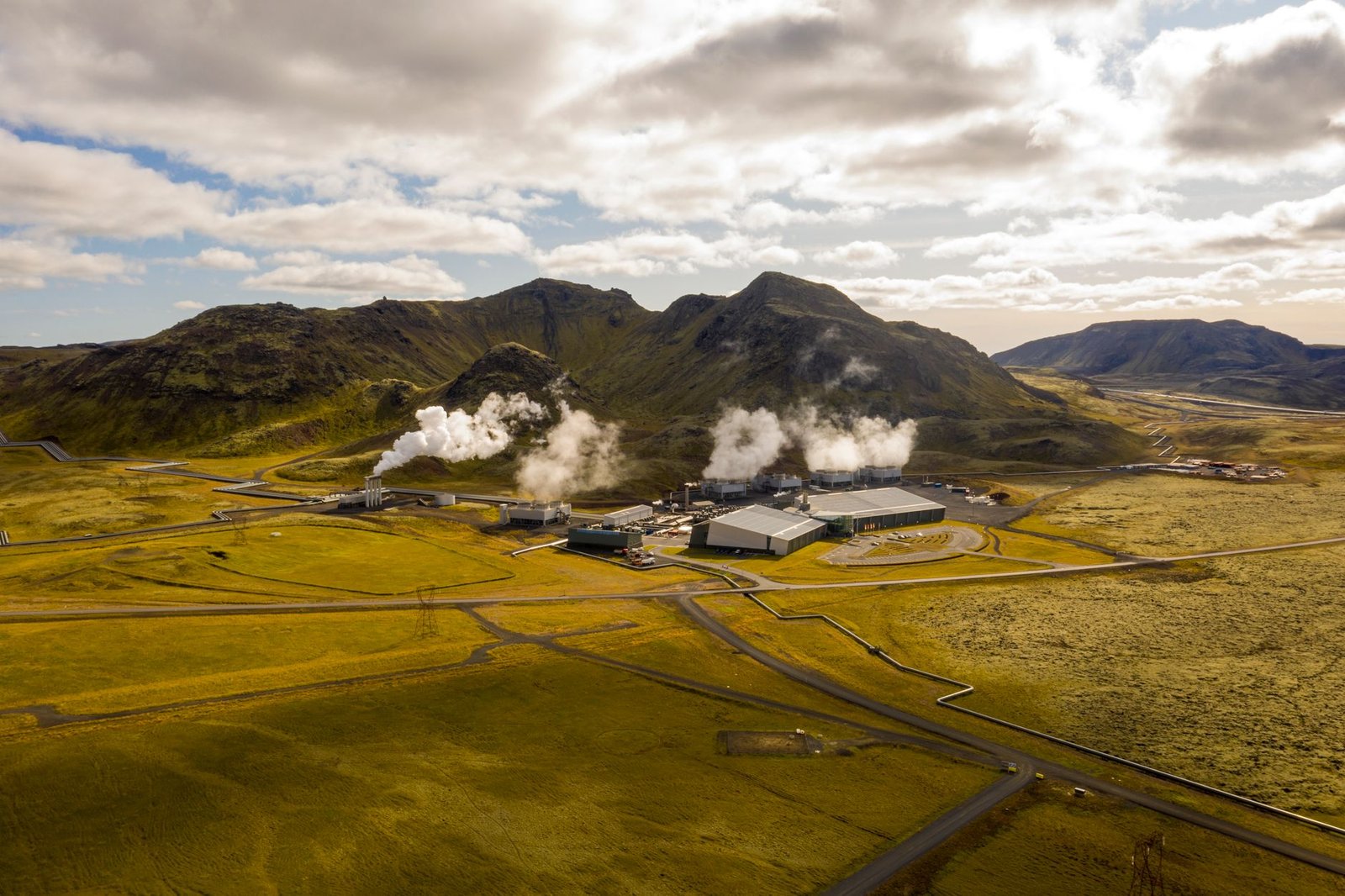
The NGHC asset, an equal joint venture between ACWA Power, Air Products, and NEOM, represents the largest commercial utility-scale green hydrogen and ammonia installation globally. Located in the Oxagon industrial zone of northwestern Saudi Arabia, the project integrates dedicated power generation with downstream processing capacity completely separated from the national electrical grid.
- Power Generation Fleet: 4.0 gigawatts of combined solar photovoltaic and onshore wind generation optimized to exploit the unique diurnal wind-solar profile of the northern Red Sea coast.
- Energy Storage: A dedicated battery energy storage system (BESS) capacity engineered to buffer intermittency and maintain flat baseload delivery to the downstream electrolyzer stacks.
- Electrolysis Infrastructure: Over 2.0 gigawatts of alkaline electrolyzer units supplied by thyssenkrupp nucera, converting high-purity water into hydrogen gas.
- Water Feedstock Integration: Seawater Reverse Osmosis (SWRO) desalination systems integrated on-site, drawing from ACWA Power’s legacy desalination engineering core to deliver process water with minimal energy penalty.
- Synthesis and Export: A Haldor Topsoe-designed ammonia synthesis loop converting 600 metric tons of green hydrogen per day into 1.2 million metric tons per year of green ammonia, liquidized at -33°C for long-distance maritime transport.
Capital Structuring and Risk Allocation: The Non-Recourse Playbook
The capital expenditure for NGHC was secured via an $8.4 billion total investment envelope, reaching financial close in May 2023 with $6.1 billion in non-recourse debt. The financing syndicate assembled 23 local, regional, and international commercial banks and development finance institutions, including the Saudi Industrial Development Fund (SIDF), the National Infrastructure Fund (NIF), and Euler Hermes export credit guarantees.
The critical structural pillar derisking this debt syndicate is the 30-year, 100% exclusive offtake agreement signed with Air Products. Under this take-or-pay structure, Air Products assumes complete commercial volume and merchant price risk upon delivery at the port of Oxagon. Air Products will ship the ammonia to target import facilities across Europe (Rotterdam, Hamburg) and Northeast Asia, re-cracking the molecule into high-purity hydrogen for heavy mobility and industrial decarbonization, or supplying green ammonia directly to maritime fuel and fertilizer applications.
Global Hydrogen Project Cost and Scale Benchmarks
The unit economics of the NEOM export project set an early baseline for export-oriented green hydrogen infrastructure. The following matrix illustrates how the ACWA Power joint venture positions against competing global mega-projects currently in development:
| Project Name | Lead Developers | Target Capacity (Electrolysis) | Project Cost (Est.) | Commercial Offtake Status | Target Delivery |
|---|---|---|---|---|---|
| NEOM Green Hydrogen (NGHC) | ACWA Power, Air Products, NEOM | 2.2 GW | $8.4 Billion | 30-Year Binding (Air Products, 100%) | 2026 |
| Western Green Energy Hub | InterContinental Energy, CWP | 35.0 GW | $70.0+ Billion | MoU Stage (Non-Binding) | 2032+ |
| HyDeal Ambition | HyDeal Consortium (Europe) | 9.5 GW | $8.0 Billion | Bilateral Letters of Intent | 2028+ |
| Murchison Green Hydrogen | Copenhagen Infrastructure Partners | 1.9 GW | $3.0 Billion | Exploratory Offtake Agreements | 2028 |
Supply Chain Economics: Desalination Integration and LCOH Realities
A prevalent criticism of desert-based hydrogen development is the water intensity of water electrolysis: roughly nine liters of demineralized water are consumed per kilogram of hydrogen produced. In an arid geography, water availability presents both an environmental hurdle and a cost vulnerability.
ACWA Power’s position as the world’s largest private desalinated water producer transforms this constraint into a competitive operational moat. Thermal and membrane desalination operating at utility scale adds less than $0.02 to the levelized cost of a kilogram of green hydrogen (LCOH), a fraction of the overall operational cost stack. Because raw electricity accounts for approximately 60% to 70% of total LCOH, access to high-capacity factor solar (exceeding 28%) and wind (exceeding 45% capacity factors in the Tabuk province) allows the NGHC installation to achieve sub-$3.00/kg production economics long before European or US domestic producers can achieve grid-parity without continuous subsidies.
Regulatory Alignment and Certification Strategy
Producing green hydrogen is economically futile without compliance verification in target import jurisdictions. For shipments bound for the European Union, molecules must strictly align with the Renewable Energy Directive II and III (RED II / RED III) Delegated Acts. These frameworks mandate rigorous standards for additionality, temporal correlation, and geographical correlation:
- Additionality: Production assets must use newly constructed renewable power assets not subsidized through existing feed-in tariffs or public grid funding. NGHC satisfies this through fully dedicated, islanded wind and solar fields.
- Temporal Correlation: Electrolyzer loads must match renewable power generation profiles on an hourly basis by 2030, disallowing reliance on fossil-fuel back-up grids.
- Greenhouse Gas (GHG) Reduction: The final molecule must achieve at least 70% emissions savings relative to a fossil fuel comparator (94 grams CO2 equivalent per megajoule), accounting for full lifecycle emissions including transport and liquefaction.
By engineering the NGHC platform as an off-grid production island, ACWA Power ensures that green ammonia exports bypass complex regulatory scrutiny related to grid carbon intensity, qualifying downstream European customers for renewable fuel of non-biological origin (RFNBO) incentives.
Expansion Potential and Portfolio Scalability
The NGHC blueprint forms the operating template for ACWA Power’s long-term green hydrogen pipeline. Leveraging relationships with sovereign balance sheets, the company has deployed identical multi-party frameworks across complementary regional corridors:
- Uzbekistan (Karalpakstan): A multi-phase project developed with Uzkimyosanoat targeting green ammonia for domestic agricultural fertilizers and regional industrial decarbonization, backed by massive Central Asian wind resource integration.
- Egypt (Suez Canal Economic Zone): Framework agreements targeting commercial bunkering infrastructure along one of the world’s highest-density maritime trade choke-points, leveraging low-cost Egyptian wind corridors.
- Oman: Joint development alongside OQ Alternative Energy and Air Products for an industrial-scale green ammonia production platform near Salalah.
These strategic hubs systematically institutionalize ACWA Power’s developer model: develop, own, operate, and optimize. Rather than operating purely as an engineering, procurement, and construction (EPC) contractor, ACWA retains long-term equity ownership, extracting yield from power generation, water transformation, and facility operations over 30- to 40-year project horizons.
Execution Risks and Market Realities
Significant engineering and geo-economic risks remain as the project progresses toward commercial operations in 2026. Electrolyzer degradation over sustained high-voltage operations requires validation at multi-gigawatt scale. Supply chain logjams in cryogenic valve systems, ammonia synthesis reactors, and high-voltage transmission equipment could lengthen commissioning timelines.
Furthermore, shipping green ammonia requires an expansion of dedicated dual-fuel or ammonia-ready gas carriers. If downstream bunkering and cracking infrastructure in Rotterdam or Asian terminals fails to match delivery schedules, offtake partners will face storage bottlenecks. Nevertheless, by executing the debt capital financing and physical construction phases ahead of international peers, ACWA Power has positioned Saudi Arabia as the reference asset and benchmark operator in the emerging transcontinental clean energy export system.


Discussion (0)