

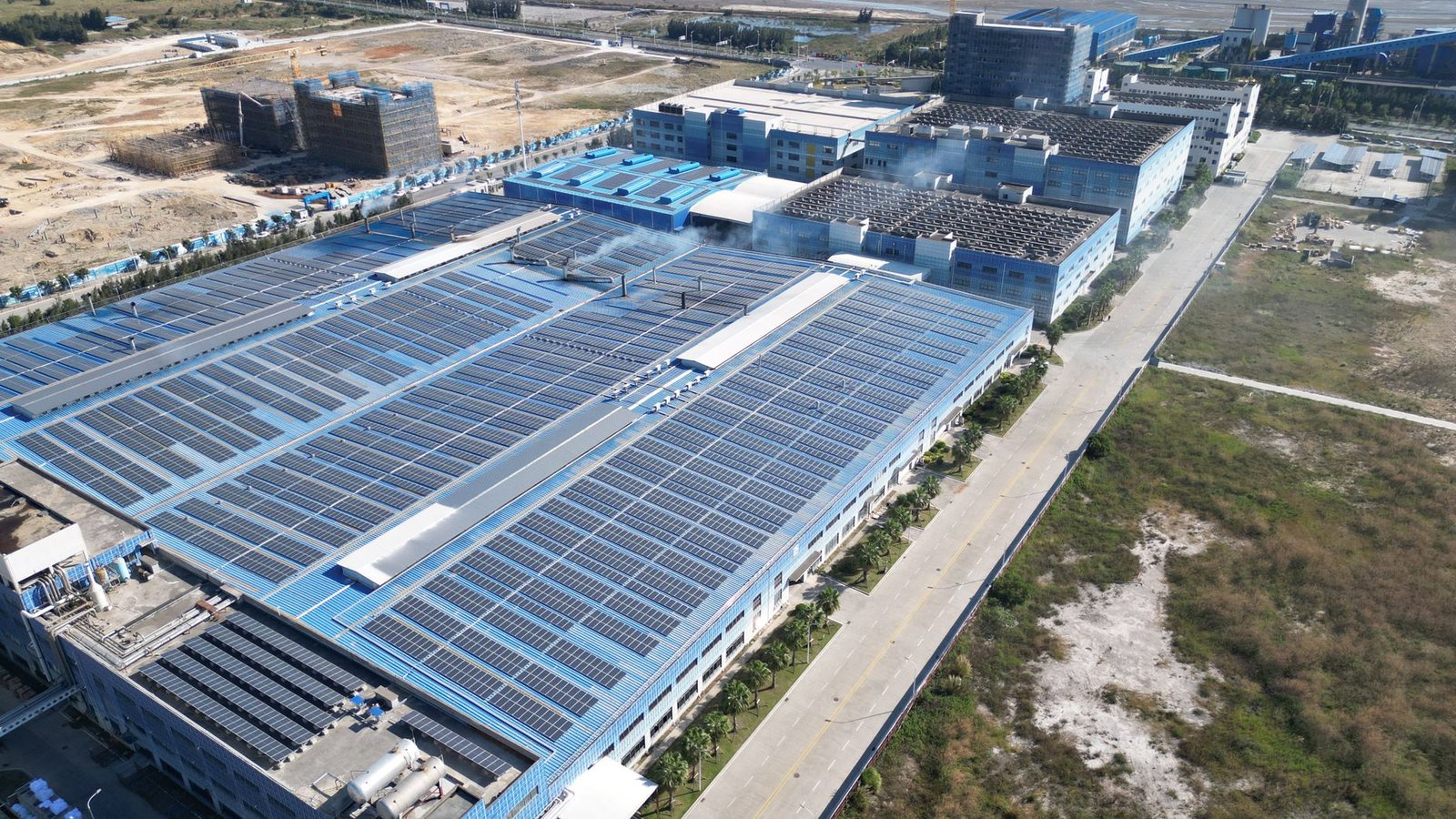
Industrial Decarbonization and Structural Tariffs in the GCC
Across the Gulf Cooperation Council (GCC), commercial and industrial (C&I) sectors account for an estimated 40% of peak electricity demand. Historically sheltered by sovereign utility subsidies, regional enterprises now face systematic tariff restructuring as hydrocarbon-exporting nations recalibrate fiscal strategies. In Saudi Arabia and the United Arab Emirates, phased utility deregulation has elevated industrial power tariffs, altering the financial calculus of baseline energy consumption. For heavy manufacturing facilities, logistics hubs, and retail conglomerates, energy operational expenditure (OpEx) represents a growing liability against bottom-line margins.
Simultaneously, multinational supply chain mandates and institutional capital directives demand transparent carbon abatement. The primary structural bottleneck for GCC enterprises is not an absence of solar irradiance, but capital allocation friction. Commercial operators prioritize balance-sheet liquidity for core operational expansion rather than depreciating, non-core generation infrastructure. The capital expenditure (CapEx) burden of multi-megawatt rooftop and ground-mounted photovoltaic (PV) arrays—coupled with asset lifecycle risks in harsh desert environments—historically limited enterprise-level distributed generation adoption.
The Strategic Playbook: De-Risked Distributed Generation
Yellow Door Energy established its competitive positioning by eliminating capital constraints via third-party energy-as-a-service structures. Founded in 2015 and later majority-acquired by global infrastructure investor Actis in 2022, the company serves as an integrated developer, asset owner, and operator of distributed generation portfolios across the Middle East and Africa.
The company’s execution strategy hinges on three structural levers:
- Zero-CapEx Deployment: Yellow Door Energy fully finances the engineering, procurement, construction, and commissioning phases, shifting infrastructure funding off enterprise balance sheets.
- Regulatory Engineering: Aligning installation designs with evolving localized distributed generation frameworks, such as Dubai’s Shams initiative and Saudi Arabia’s Water and Electricity Regulatory Authority (WERA) self-consumption regulations.
- Desert-Engineered Asset Management: Deploying equipment configurations optimized for hyper-arid climates, including bifacial monocrystalline modules, microinverter/string architectures to reduce thermal clipping, and robotic dry-cleaning integrations to mitigate soiling losses exceeding 20% per month.
Business Model: Institutional Power Purchase Agreements
Yellow Door Energy functions primarily under long-term Power Purchase Agreements (PPAs) and Lease-to-Own models spanning 15 to 25 years. Under these bilateral contracts, commercial clients purchase clean kilowatt-hours generated on their own rooftops or adjacent land at a predetermined, discounted tariff relative to the regional grid baseline.
| Operational Parameter | Conventional Utility Supply | Yellow Door Energy PPA Structure |
|---|---|---|
| Upfront Capital Expenditure | Zero (Grid connection fees apply) | Zero (Fully capitalized by developer) |
| Tariff Volatility | Subject to state regulatory adjustments | Fixed or indexed predictability (typically 10-30% discount) |
| Asset Performance Risk | Borne by grid operator/client | Borne exclusively by Yellow Door Energy |
| Balance Sheet Treatment | Utility OpEx | Off-balance-sheet operational expense |
| Operations & Maintenance | Internal responsibility | Full turnkey lifecycle O&M included |
The enterprise revenue model generates yield from aggregated, diversified distributed generation portfolios. Risk mitigation relies on rigorous counterparty credit underwriting, long-term contracted cash flows, and credit-enhanced financing facilities provided by development finance institutions such as the International Finance Corporation (IFC) and commercial banking syndicates.
Technological Specialization in Desert Operating Conditions
Operating distributed solar across the Arabian Peninsula requires mitigation of high ambient heat, which induces negative temperature coefficients in silicon cells. Yellow Door Energy incorporates advanced thermal monitoring, specialized mounting systems to maximize airflow ventilation beneath modules, and dust-resistant balance-of-system (BOS) components. Operational continuity is managed through centralized supervisory control and data acquisition (SCADA) telemetry, tracking real-time performance ratios across hundreds of distributed nodes.
Cross-Border Scalability and Regional Expansion Vectors
With an operational and under-construction portfolio exceeding 240 megawatts across the UAE, Saudi Arabia, Bahrain, and Jordan, Yellow Door Energy is scaling across high-growth industrial clusters. In Saudi Arabia, the drive toward industrialization under Vision 2030—anchored by the National Industrial Development and Logistics Program (NIDLP)—presents immediate opportunities in logistics zones, industrial cities managed by MODON, and mining facilities seeking hybrid generation.
As regional grids introduce net-billing architectures and time-of-use tariffs, Yellow Door Energy is expanding into behind-the-meter Battery Energy Storage Systems (BESS). Incorporating industrial-scale battery storage enables peak shaving, microgrid resilience, and continuous load balancing for mission-critical operations such as cold-storage logistics and automated manufacturing. Backed by institutional infrastructure capital, Yellow Door Energy demonstrates how private asset developers can institutionalize distributed solar GCC commercial infrastructure without state balance-sheet intervention.


Discussion (0)