

The Soiling Penalty: Regional Scarcity and Desert PV Economics
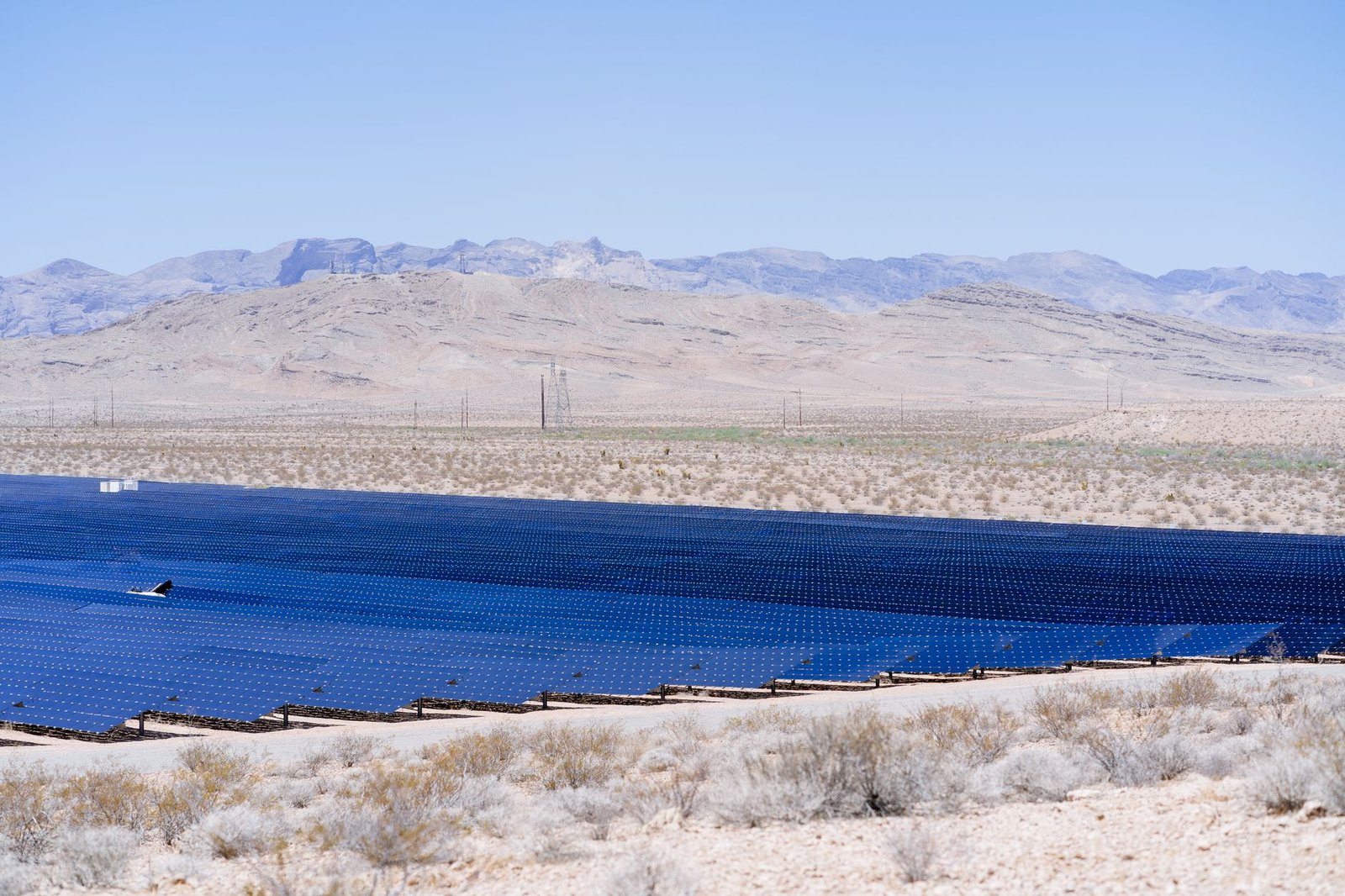
The Middle East and North Africa (MENA) region hosts some of the world’s highest horizontal irradiance levels, frequently exceeding 2,200 kWh/m² annually. However, this solar abundance coincides with an acute operational challenge: rapid, particulate-driven photovoltaic (PV) soiling. In desert environments such as the Rub’ al Khali and the broader Arabian Peninsula, ambient dust deposition causes nominal power output losses between 0.5% and 1.0% per day during baseline conditions, escalating to over 60% following severe dust storms.
Historically, mitigation strategies relied on manual labor utilizing demineralized or desalinated water. This approach is economically and environmentally untenable in hyper-arid basins. Producing and transporting purified water to remote utility-scale installations carries a delivered cost running between $2.50 and $5.00 per cubic meter. For a 1-gigawatt (GW) solar installation, traditional cleaning cycles consume up to 50 million liters of water annually. When operators defer cleaning cycles to suppress these operational expenditures (OPEX), the resulting cementation—where nighttime atmospheric humidity causes airborne calcite and silica particles to form a hard crust on panel surfaces—induces irreversible performance degradation and accelerates hot-spot formation.
This operational reality has established autonomous, water-free cleaning not as an optional efficiency enhancement, but as a critical determinant of Levelized Cost of Electricity (LCOE) across regional utility portfolios.
The Strategic Architecture: Nomadd Desert Solar
Spun out of the King Abdullah University of Science and Technology (KAUST) and established in Saudi Arabia, Nomadd Desert Solar (NO-water Mechanical Automated Dusting Device) engineered its mechanical platform specifically to decouple PV panel maintenance from regional water infrastructure. Rather than modifying existing agricultural or industrial cleaning systems, the company targeted the micro-physics of desert dust adhesion under high ambient temperatures and cyclical humidity.
Mechanical Kinematics and Surface Tribology
Desert dust in the GCC is predominantly composed of fine silica, feldspar, and carbonate minerals with mean grain sizes often falling below 10 micrometers. Standard mechanical sweepers risk abrasive scouring of the panel’s anti-reflective coating (ARC), which permanently lowers optical transmittance and reduces panel lifespan. Nomadd addressed this through a specialized polymer microfiber cross-axis brush mechanism operating in conjunction with an engineered airflow system.
- Non-Abrasive Particulate Displacement: The brush rotates at calibrated velocity vectors to physically lift particulates above their static angle of repose without generating excessive normal forces against the glass surface. Accelerated testing equivalent to 25 years of daily cleaning indicates zero statistically significant degradation of the anti-reflective coating.
- Bespoke Rail-Guided Mobility: The units traverse strings of solar modules along integrated lightweight aluminum guide rails. By distributing mechanical loads across panel frames, the system prevents micro-cracking within the crystalline silicon wafers during traversal.
- High-Tolerance Climatization: Internal actuators, drive motors, and edge computing units are rated to IP66/IP67 ingress standards, capable of continuous operations at ambient temperatures exceeding 55°C and surface module temperatures up to 80°C.
Operational Comparison: Utility-Scale Mitigation Strategies
| Metric / Parameter | Manual Wet Cleaning | Semi-Automated Truck Washers | Nomadd Waterless Robotics |
|---|---|---|---|
| Water Consumption (L/MW/yr) | 35,000 – 50,000 | 15,000 – 25,000 | 0 |
| Cleaning Frequency | Bi-weekly / Monthly | Weekly / Bi-weekly | Daily (Automated Nocturnal) |
| Daily Soiling Losses (Average) | 4.5% – 8.0% | 3.0% – 5.5% | < 1.2% |
| Labor Requirements | High (15–20 personnel/100MW) | Moderate (Operator crews) | Low (Supervisory/Maintenance) |
| ARC Degradation Risk | Low to Moderate (Slurry scour) | Moderate | Negligible (Optimized tribology) |
| OPEX Predictability | Low (Commodity & labor exposed) | Moderate (Fuel/maintenance index) | High (Fixed capital amortization) |
Capital Allocation and Deployment Economics
For institutional investors and engineering, procurement, and construction (EPC) conglomerates like ACWA Power, Masdar, and their international counterparts, adopting robotic desert solar panel cleaning directly recalibrates project finance underwriting. Incorporating daily waterless cleaning shifts the yield curve from a saw-tooth pattern (characterized by steep post-wash peaks and deep degradation troughs) to a sustained linear performance profile.
LCOE Compression Mechanics
Integrating autonomous daily cleaning directly impacts baseline LCOE calculations via three core variables:
- Base Yield Capture: Daily dust removal reclaims between 3% and 6% of gross annual generation that is otherwise surrendered under conventional bi-weekly cleaning regimes, directly bolstering internal rate of return (IRR) for independent power producers (IPPs).
- Water Infrastructure Elimination: Utility-scale sites eradicate the capital expenditure (CAPEX) associated with on-site reverse osmosis plants, massive water storage bladders, and specialized water-hauling fleets.
- Risk De-weighting in Debt Service: Mitigating yield volatility reduces performance ratio variance, enabling project sponsors to secure more competitive debt-service coverage ratios (DSCR) from multilateral financing entities.
Nomadd delivers its technology through two primary models: a direct turnkey capital equipment sale paired with a long-term service agreement (LTSA), and a Robotics-as-a-Service (RaaS) framework. The RaaS structure is particularly attractive for operational assets undergoing repowering or efficiency optimization, shifting the financial commitment from upfront balance sheet outlays to performance-indexed operating expenditures.
Global Expansion Vectors and Macro Tailwinds
While Saudi Arabia serves as Nomadd’s primary anchor market—catalyzed by the Public Investment Fund’s (PIF) commitment to install tens of gigawatts under Vision 2030 targets—the company’s addressable market extends to every high-DNI (Direct Normal Irradiance), water-stressed geography globally.
Cross-Border Market Penetration
The convergence of utility-scale solar expansion and extreme aridity is not unique to the Gulf. Nomadd is structurally positioned to export its hardware-software architecture to several international theaters:
- North Africa (Egypt, Morocco, Algeria): The shift toward green hydrogen production in the Suez Canal Economic Zone and broader Maghreb necessitates maximum capacity factors from downstream solar assets, in regions where local groundwater extraction faces strict regulatory caps.
- The Atacama Desert (Chile): Featuring some of the highest solar irradiance metrics globally alongside zero precipitation and highly abrasive mineral dust, the Chilean market requires resilient, water-free cleaning systems to preserve module integrity.
- Western India (Rajasthan and Gujarat): India’s gigawatt-scale solar parks face severe water allocation conflicts with regional agrarian sectors, accelerating policy pressure toward dry mechanical cleaning alternatives.
- The Southwestern United States: Water allocations from the Colorado River Basin are increasingly constrained, incentivizing solar asset owners to phase out wet cleaning protocols to comply with environmental impact covenants.
Policy and Industrial Ecosystem Integration
Nomadd’s operational evolution demonstrates the maturation of the Saudi venture and industrial ecosystem. Originating within KAUST’s research and development infrastructure, the company leveraged local venture capital and non-dilutive sovereign grant programs to bridge the commercialization gap from prototype to utility field deployment. The company’s localization strategy directly aligns with the Kingdom’s In-Kingdom Total Value Add (IKTVA) and National Industrial Development and Logistics Program (NIDLP) mandates, driving regional supply chain integration for mechanical and electronic sub-assemblies.
As global renewable portfolios scale to meet decarbonization targets, the intersection of hardware automation, localized industrial production, and waterless operations establishes companies like Nomadd as essential infrastructure enablers within the broader clean energy transition.


Discussion (0)