

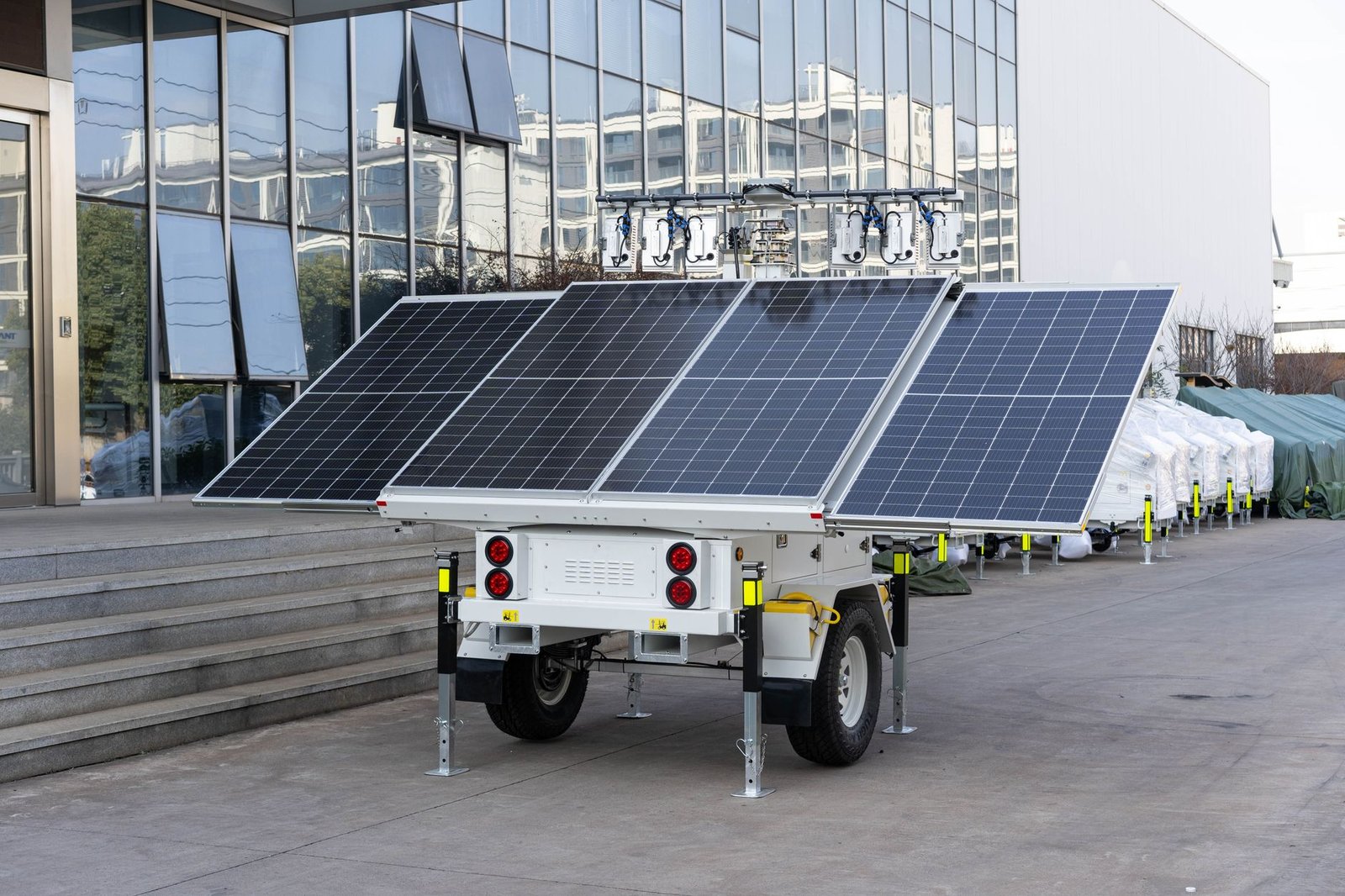
Industrial activity across the Gulf Cooperation Council (GCC) faces a structural energy contradiction: while national grids rapidly expand utility-scale photovoltaic infrastructure, remote industrial assets remain captive to high-cost, carbon-intensive diesel generation. From remote oilfields in Abu Dhabi’s Western Region to mega-infrastructure earthworks along Saudi Arabia’s Red Sea coast, off-grid power has historically meant burning subsidized or spot-market diesel in inefficient reciprocating internal combustion engines.
The High Cost of Remote Power: Middle East Industrial Scarcity
Operating beyond the transmission envelope in the Middle East exposes balance sheets to extreme logistics costs. Fuel transport to remote sites routinely inflates raw diesel expenditure by 30% to 60%, driving real levelized costs of electricity (LCOE) to $0.28–$0.48 per kilowatt-hour (kWh). Beyond direct fuel pricing, logistics corridors through desert topography introduce supply chain vulnerabilities, maintenance overhead from heat and dust ingress, and severe Scope 1 emissions liabilities.
Historically, off-grid operators avoided solar photovoltaics due to the transient nature of their assets. Civil construction projects run for 24 to 48 months; exploratory mining and oilfield appraisal campaigns operate on even tighter horizons. Standard utility solar designs require rigid capital investments, long paybacks, and civil works incompatible with rapid mobilization and demobilization. This dynamic created an operational bottleneck: industrial demand required renewable economics paired with the mobility and reliability of a trailer-mounted diesel generator.
Enerwhere’s Strategic Playbook: The Mobile Hybrid Architecture
Founded in Dubai, Enerwhere bypassed the traditional utility Independent Power Producer (IPP) paradigm to build a specialized, temporary utility model. Instead of pouring concrete foundations and engineering static substations, the company engineered modular, containerized, and rapid-deployment solar-diesel-storage systems tailored explicitly for harsh arid operating conditions.
The engineering foundation of Enerwhere’s platform relies on three proprietary pillars:
- Rapid Mobilization and Relocatability: Pre-wired, containerized solar arrays and skid-mounted inverters engineered for commissioning in days rather than months, minimizing civil site works and enabling 100% asset recovery post-contract.
- Dynamic Hybrid Automation and Controls: High-speed automated control architectures that balance erratic industrial loads (such as heavy tower cranes, crushers, and dewatering pumps) across fluctuating PV yields, battery energy storage systems (BESS), and modulating diesel engines.
- Thermal and Environmental Hardening: Inverters and battery modules rated for 50°C ambient temperatures, incorporating specialized heat exchangers and automated dry-cleaning dust mitigation to prevent severe thermal derating and soiling losses common in Gulf desert basins.
Comparative Asset Economics: Diesel Baseline vs. Hybrid Solar Microgrid
| Metric | Conventional Diesel Generation | Enerwhere Hybrid Microgrid | Variance / Operational Impact |
|---|---|---|---|
| Average LCOE ($/kWh) | $0.32 – $0.45 | $0.19 – $0.26 | -35% to -42% reduction |
| Fuel Consumption (L/MWh) | 260 – 290 | 130 – 170 | Up to 50% fuel displacement |
| Asset Mobilization Timeline | 7 – 14 days | 14 – 28 days | Marginal delay, offset by unit savings |
| Contract Structure | Short-term equipment lease | Power Purchase Agreement (PPA) / Energy-as-a-Service | Zero capex off-balance-sheet execution |
| Scope 1 Carbon Intensity | ~0.78 tCO2e/MWh | ~0.38 tCO2e/MWh | 45%–55% instant carbon mitigation |
The Clean-Energy-as-a-Service (CaaS) Business Model
Enerwhere’s commercial differentiation lies in its monetization structure. The company does not act as an EPC contractor selling hardware to EPC balance sheets, nor as a low-margin equipment rental house. Instead, it deploys a Clean-Energy-as-a-Service (CaaS) model, monetizing delivered megawatt-hours under medium-term power purchase agreements (PPAs) and service contracts.
This structure shifts financial risk away from industrial operators:
- Zero Upfront Capital Expenditure: The client avoids capital outlays on energy assets that will outlive the project lifecycle.
- Guaranteed Fuel and Energy Savings: Enerwhere structures contracts to bill lower than the client’s historical diesel-only operating expenditure, creating day-one positive cash flow arbitrage.
- Fleet Fungibility: Because the components (PV skids, inverters, storage containers) are standard, modular, and containerized, Enerwhere redeploys hardware across successive clients once a contract concludes, maximizing capital utilization over a 15-year asset life.
By absorbing the asset ownership, technical performance, and logistics risks, Enerwhere captured industrial marquee contracts across the UAE and Saudi Arabia, including utility-grade construction microgrids, off-grid island resorts, and remote industrial staging facilities.
Global Expansion Potential and Emerging Frontier Realities
The total addressable market for off-grid hybrid power across the Middle East and North Africa (MENA), Sub-Saharan Africa, and Central Asia is substantial. Driven by mining developments, infrastructure programs, and energy transit corridors, global diesel fuel spend for off-grid industrial power surpasses $40 billion annually.
Enerwhere’s operational model provides a defensible blueprint for expansion into high-risk, high-reward jurisdictions:
- African Mining Enclaves: Remote gold, copper, and lithium concessions across the Sahel and Southern Africa face chronic grid deficits and crippling transport costs for fuel, matching the operational profile solved in the Arabian desert.
- Island and Reconstruction Geographies: Isolated coastal nodes and reconstruction zones across the Mediterranean basin and Indian Ocean rim rely on high-cost barge-delivered fuel, making containerized solar-diesel hybridization economically superior.
- Electrification of Oil & Gas Upstream: National oil companies (NOCs) face increasing regulatory mandates to decarbonize upstream operations. Solar microgrids displacing diesel on well pads and pipeline pumping stations directly reduce the carbon intensity of regional crude output.
Execution risks persist. Managing distributed fleets of solar-diesel-storage assets across multiple emerging markets introduces complex geopolitical, currency conversion, and hardware-recovery risks. However, as the cost of commercial battery storage falls and industrial carbon tracking tightens, off-grid solar microgrids in the Middle East demonstrate how localized engineering innovation can dismantle structural reliance on fossil fuels in the world’s most demanding physical environments.



Discussion (0)