

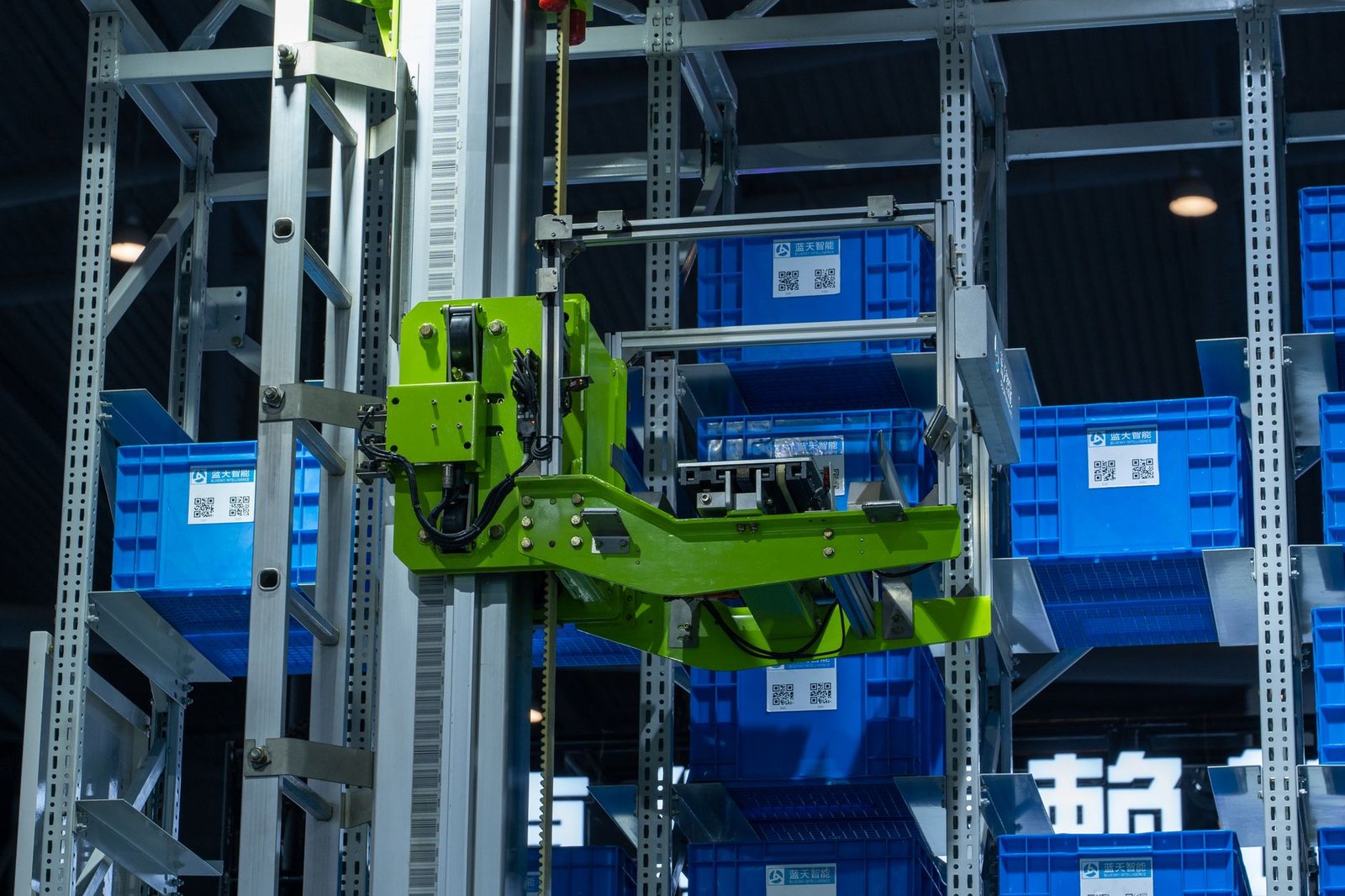
Saudi Arabia’s e-commerce market is transitioning from an emerging consumer phenomenon into an institutional infrastructure play. Accelerated by Vision 2030 economic transformation mandates and targeted logistics programs under the National Industrial Development and Logistics Program (NIDLP), domestic business-to-consumer (B2C) parcel volumes have surged. Yet, behind high gross merchandise value (GMV) expansion lies a structural choke point: fulfillment velocity. As digital-native brands and cross-border merchants battle customer acquisition costs, the differentiator has shifted from digital storefronts to the physical supply chain. Within this structural realignment, SALASA has positioned itself as an infrastructure-layer orchestrator of high-velocity warehousing and automated dispatch.
The Structural Bottleneck: Legacy Warehousing vs. Digital Commerce Velocity
For decades, commercial warehousing across the Gulf Cooperation Council (GCC) targeted wholesale pallet storage. Industrial real estate developments in Riyadh, Jeddah, and Dammam prioritized low inventory turns, static holding patterns, and bulk container discharge suited for traditional retail distribution. The sudden escalation of high-frequency, low-basket-size online shopping exposed the physical and operational friction of this setup. Traditional third-party logistics providers (3PLs) suffered from fragmented SKU cataloging, manual pick-and-pack inefficiencies, and legacy warehouse management systems (WMS) that were fundamentally incompatible with modern open-API storefronts like Salla, Zid, and Shopify.
This mismatch created acute operational drags: outbound order fulfillment latency routinely stretched to 48 hours, inventory accuracy fluctuated below 92%, and last-mile carrier handoffs relied on manual manifest sheets. Compounding the challenge was the region’s historical dependence on cash-on-delivery (COD) and high return (reverse logistics) rates, which frequently exceeded 20% in apparel categories. Solving these structural failure points required more than incremental floor space; it required re-engineering fulfillment infrastructure into an automated, software-governed utility.
SALASA’s Architectural Strategy: Decoupling Software and Physical Real Estate
Founded in 2016 by Abdulmajeed Alyemeni and Hasan Alhazmi, SALASA approached e-commerce fulfillment Saudi operations through an algorithmic, software-first framework rather than a speculative real estate holding strategy. Recognizing that pure balance-sheet heavy logistics operations scale with diminishing capital efficiency, SALASA engineered a modular fulfillment network combining dedicated centralized fulfillment centers with strategically positioned urban sorting nodes.
Algorithmic Inventory Placement and Wave Picking
At the center of SALASA’s operational model is its proprietary Warehouse Management System (WMS), integrated directly into regional carrier networks and e-commerce platforms. Rather than relying on rigid zone-picking layouts, SALASA deploys dynamic batch and wave-picking algorithms that evaluate incoming order velocity, physical SKU dimensions, and carrier cut-off schedules in real time. Fast-moving SKUs are continuously re-slotted closer to active packing corridors, compressing travel time per pick ticket.
Carrier-Agnostic Last-Mile Routing Middleware
The traditional vulnerability of e-commerce delivery inside Saudi Arabia has been parcel handover to fragmented last-mile courier fleets. Carrier performance varies dramatically by city tier, postal geography, and load balancing. SALASA neutralized this point of failure by building an integrated logistics orchestration engine. Instead of binding customer inventory to a single logistics provider, SALASA’s dispatch middleware programmatically allocates parcels across multiple domestic carriers (including SMSA, Aramex, and local micro-fleets) based on zip-code performance data, real-time fleet capacity, and delivery speed benchmarks.
Operational Benchmarks: Structural Efficiency Gains
By establishing rigorous internal key performance indicators (KPIs), SALASA transformed e-commerce fulfillment Saudi workflows from an operational cost center into a strategic lever. The quantifiable performance differences between traditional regional 3PLs and SALASA’s technology-directed approach highlight this shift:
| Operational Metric | Traditional Regional 3PL | SALASA Cloud Fulfillment |
|---|---|---|
| Order Ingestion to Dispatch (SLA) | 24 to 48 Hours | Under 3 Hours |
| Inventory Accuracy Rate | 90.0% – 93.5% | 99.8% |
| Platform Integration Time | 14 to 30 Days (Custom EDI) | Instant (REST APIs / Webhooks) |
| Reverse Logistics Processing Cycle | 5 to 7 Days | Under 24 Hours |
| Carrier Allocation Logic | Static / Manual Assignment | Algorithmic (Cost vs. Speed SLA) |
Unit Economics and Business Model Sustainability
SALASA operates an asset-right, usage-based pricing architecture that aligns operational margins with customer transaction volume. Rather than burdening direct-to-consumer (D2C) brands with long-term fixed floor space leases, the company structures its revenue around three core vectors:
- Dynamic Storage Yield: Micro-metered billing based on cubic meter utilization per day, incentivizing merchants to maintain lean inventory buffers and high inventory turns.
- Fulfillment Execution: Tiered pick-pack-ship fees calibrated to item dimension, pack fragility, and packaging customizations.
- Value-Added Service Tooling: Margin-rich ancillary services including kitting, scheduled cross-border customs deconsolidation, temperature-managed storage, and automated return quality inspection.
This monetization matrix preserves working capital for scaling merchants while insulating SALASA from commercial real estate downturns. Because fixed costs are tied primarily to automation hardware amortizations and warehouse leases, high volumetric density within core Riyadh hubs yields substantial operating leverage as parcel throughput expands.
The Regional Moat and Cross-Border Interoperability
As international enterprises seek entry into the Saudi consumer market, the primary hurdle remains regulatory, customs, and physical network compliance. SALASA’s strategic expansion establishes a turnkey gateway for global brands targeting the Gulf. By linking port-of-entry deconsolidation in Jeddah and Dammam directly to bonded or domestic fulfillment hubs in Riyadh, SALASA enables cross-border digital sellers to offer domestic delivery timelines matching native incumbents.
Furthermore, Saudi Arabia’s Special Integrated Logistics Zones (SILZ) and ongoing regulatory overhauls driven by the Transport General Authority (TGA) are institutionalizing logistics standards. SALASA’s programmatic tracking, API transparency, and automated compliance frameworks align cleanly with these regulatory frameworks, securing a structural barrier to entry against less modernized legacy operators.
The Strategic Horizon: Next-Generation Fulfillment Infrastructure
Looking ahead, e-commerce fulfillment Saudi infrastructure will confront new competitive pressures driven by artificial intelligence and automated guided vehicle (AGV) deployments. As same-day delivery expectations spread from Riyadh and Jeddah to secondary markets like Tabuk, Abha, and Al-Khobar, fulfillment centers must transition into predictive regional nodes. SALASA’s technical roadmap points toward predictive inbound inventory balancing, enabling stock redistribution based on regional search volume and historical consumption curves before transactions occur. For institutional investors, sovereign funds, and market observers, SALASA’s model serves as an instructive case study in how capital-efficient technical infrastructure can unlock commerce across emerging digital economies.




Discussion (0)