

The Arabian Peninsula operates under one of the world’s most acute resource imbalances. With renewable internal freshwater resources below 15 cubic meters per capita per year and an import dependency hovering above 85% for core food staples, agricultural resilience in the United Arab Emirates cannot rely on incremental optimization of conventional techniques. Instead, food security requires an industrial decoupling of yield from arable land and groundwater extraction. Within this structural environment, Abu Dhabi-based Madar Farms has established a high-density, controlled-environment agriculture (CEA) operational model, positioning sustainable urban farming UAE frameworks at the intersection of resource conservation and institutional capital allocation.
The Arid Macro Problem: Groundwater Depletion vs. Caloric Sovereignty
Historically, the Gulf Cooperation Council (GCC) attempted agricultural independence through large-scale open-field irrigation during the late 20th century. This policy accelerated the depletion of non-renewable fossil aquifers, increased soil salinization, and delivered poor economic returns on invested water. Traditional flood or pivot irrigation in arid conditions loses upwards of 60% of water volume to surface evaporation and unrecoverable drainage before uptake occurs.
Simultaneously, reliance on long-tail global supply chains exposes the UAE to geopolitical disruption, freight price volatility, and cold-chain losses exceeding 15% across perishable categories. The economic imperative is clear: domestic production must maximize edible biomass per cubic meter of water and kilowatt-hour of energy expended, without relying on non-potable agricultural runoff or depleted groundwater reservoirs.
Madar Farms: Strategic Architecture of Industrial CEA
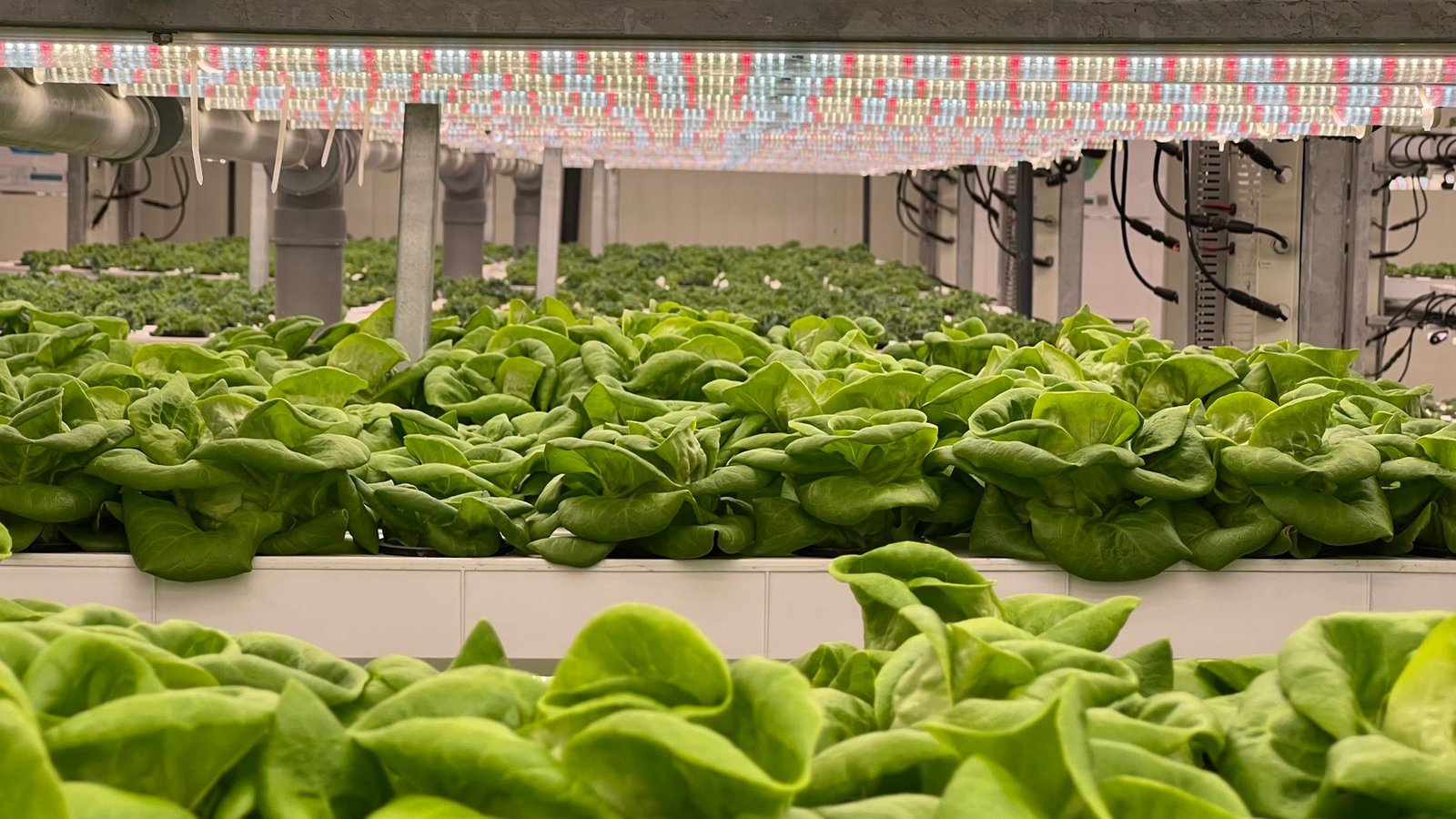
Madar Farms operates industrial-scale indoor vertical farms and automated hydroponic systems, engineered specifically to address arid thermal and radiative loads. Rather than treating urban agriculture as a boutique real estate amenity, the company approaches farming as an advanced manufacturing discipline.
Closed-Loop Hydroponics and Water Mass-Balance
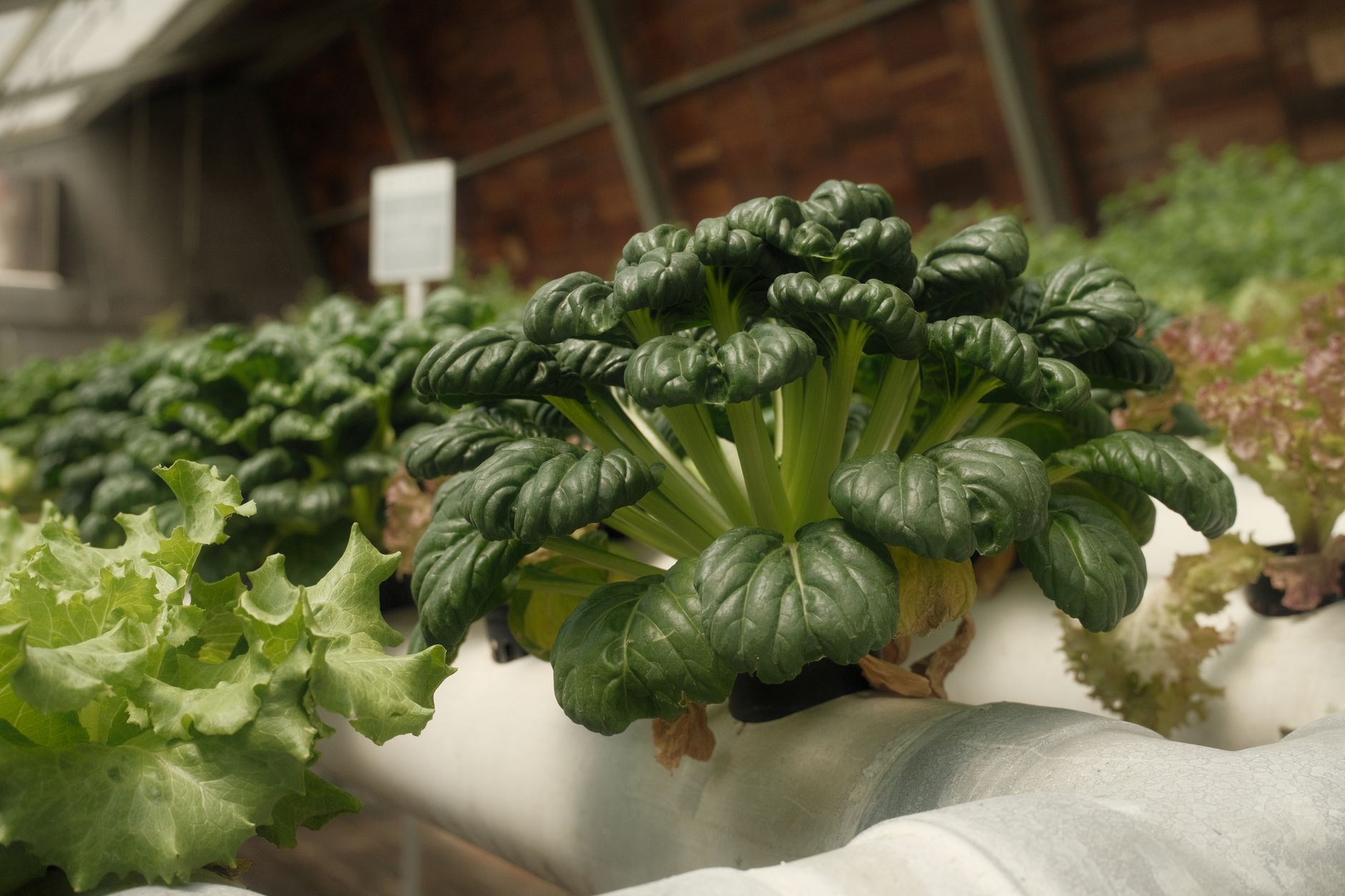
At the core of Madar Farms’ technical deployment is an automated nutrient-film and deep-water hydroponic infrastructure. By isolating the root zone and recirculating nutrient-dosed water through reverse osmosis and UV sanitation stages, the facility achieves a 95% reduction in water consumption per kilogram of leafy greens compared to traditional regional open-field cultivation.
- Transpirational Recycling: Condensation recovered from high-efficiency HVAC dehumidification systems is filtered and reintroduced into the fertigation loop, capturing water that traditional open-field farms lose irreversibly to the atmosphere.
- Dynamic Photoperiod Management: Customized Photosynthetically Active Radiation (PAR) spectrum LED arrays accelerate biomass accumulation while minimizing thermal dissipation within grow rooms.
- Microbial and Pathogen Exclusion: The fully sealed indoor footprint negates the requirement for synthetic chemical pesticides and fungicides, stabilizing baseline crop yields year-round.
Comparative Production Efficiency: CEA vs. Conventional Farming
The commercial thesis for indoor sustainable urban farming UAE platforms rests on input-to-output ratios. Below is an operational matrix comparing conventional arid farming systems against Madar Farms’ indoor vertical infrastructure:
| Metric | Open-Field Irrigation | Shade Net Greenhouse | Madar Farms CEA Facility |
|---|---|---|---|
| Water Use (L/kg Biomass) | 250 – 350 L | 80 – 120 L | 8 – 15 L |
| Yield Uniformity | Seasonal (<60% A-Grade) | Moderate (75% A-Grade) | Consistent (>95% A-Grade) |
| Land Footprint Required | High (1x baseline) | Moderate (0.3x baseline) | Minimal (0.05x baseline) |
| Pesticide Application | Mandatory / High | Moderate | Zero Synthetic Chemical Input |
| Supply Chain Transit Days | 3 – 7 Days (Imported) | 1 – 2 Days | < 24 Hours to Point of Sale |
Capital Allocation and Unit Economics in Arid Climates
The traditional vulnerability of indoor vertical farming globally has centered on operating expenditures (OpEx), driven primarily by electrical power loads for artificial lighting and continuous climate control. In temperate zones, high retail energy tariffs have undermined the financial performance of several prominent CEA ventures.
In the UAE, however, unit economics benefit from distinct structural tailwinds:
- Grid Scale and Clean Baseload: The expansion of ultra-low-cost utility-scale solar installations (such as the Al Dhafra Solar PV plant) and baseload nuclear energy from the Barakah Nuclear Energy Plant creates a path toward progressively lower levelized costs of energy (LCOE) for high-load industrial consumers.
- Premium Freight Offset: Because high-end imported produce incurs substantial air-freight and refrigerated logistics surcharges, locally cultivated, ultra-fresh produce can compete at retail parity while sustaining gross margins above 40%.
- Predictable Supply Contracts: Offtake agreements with major UAE retail chains and hospitality operators insulate operations from the commodity price swings endemic to open-market agricultural trade.
Policy Integration: The UAE National Food Security Strategy 2051
Madar Farms operates in close structural alignment with federal and emirate-level mandates, specifically the UAE National Food Security Strategy 2051, overseen by the Ministry of Climate Change and Environment. The framework targets raising the UAE to top-tier status on the Global Food Security Index by building self-sufficient agritech capabilities, incentivizing private-sector technology adoption, and enforcing rigorous resource efficiency metrics.
Furthermore, Abu Dhabi Investment Office (ADIO) funding mechanisms and specialized industrial zones provide infrastructure concessions, utility subsidies, and research-and-development support. This public-private cohesion mitigates early-stage capital expenditure (CapEx) hurdles, accelerating the transition from proof-of-concept facilities to multi-hectare commercial operations.
Global Expansion Potential and Technological Exportability
The operational models perfected by Madar Farms within the harsh thermal realities of Abu Dhabi serve as a critical benchmark for international markets facing accelerating climate stress. The software, fertigation control loops, and HVAC integration protocols engineered for GCC summer ambient conditions (exceeding 45°C with high humidity) represent an exportable intellectual property stack.
As aridification, soil degradation, and water scarcity intensify across North Africa, Southern Europe, and Central Asia, the operational data generated by Madar Farms provides an empirical blueprint for institutional food production that functions independently of rainfall patterns and arable topsoil.



Discussion (0)