

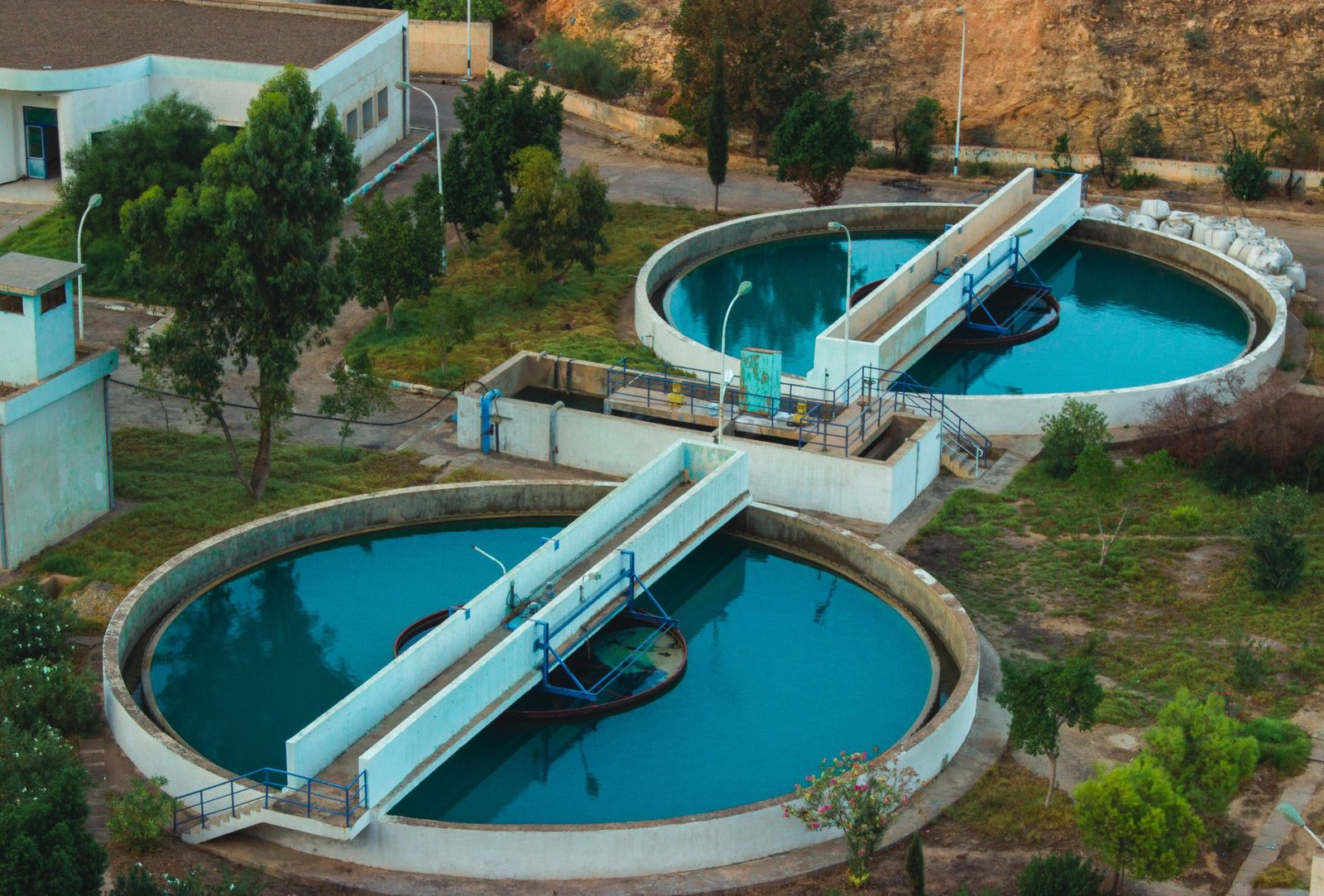
The Structural Deficit: Seawater Dependency and Agricultural Viability
The Gulf Cooperation Council (GCC) operates under one of the world’s most severe natural water deficits. Across Saudi Arabia, the United Arab Emirates, Qatar, Kuwait, Bahrain, and Oman, renewable internal freshwater resources sit well below the United Nations absolute water scarcity threshold of 500 cubic meters per capita per year. Historically, municipal and industrial expansion relied almost exclusively on thermal desalination processes such as Multi-Stage Flash (MSF) and Multi-Effect Distillation (MED), before shifting capital expenditure toward modern Seawater Reverse Osmosis (SWRO). While SWRO reduced specific energy consumption (SEC) from thermal baselines exceeding 10 kWh/m³ down to approximately 3.5 to 4.5 kWh/m³, applying this treated municipal-grade water directly to field agriculture remains economically untenable.
Agriculture accounts for 65% to 80% of total freshwater withdrawals in the GCC, largely drawn from rapidly depleting non-renewable fossil aquifers. To meet national food self-sufficiency mandates—such as the UAE National Food Security Strategy 2051 and Saudi Vision 2030 agricultural initiatives—regional operators must decouple irrigation from non-renewable groundwater without imposing prohibitive energy expenditures on utility grids. Ocean Rinse addresses this macroeconomic friction through membrane-driven separations targeted specifically at agricultural output specifications.
Ocean Rinse’s Strategic Playbook: Advanced Nanofiltration Architecture
Conventional SWRO plants are engineered for total dissolved solids (TDS) reduction down to 200–500 mg/L, tailored for human consumption. This over-purifies water meant for crop cultivation, stripping essential macro-nutrients like calcium and magnesium while demanding high osmotic operating pressures (60 to 75 bar). The resulting treated permeate then requires artificial remineralization before use, compounding both capital expenditure (CapEx) and operating expenditure (OpEx).
Ocean Rinse departs from this paradigm by implementing high-permeance, ion-selective biomimetic nanofiltration (NF) membranes coupled with targeted low-pressure reverse osmosis. The core architectural advantages include:
- Targeted Ion Rejection: The membranes reject 99.2% of phytotoxic monovalent ions (primarily sodium and chloride) while selectively retaining divalent ions (calcium, magnesium, and sulfate) necessary for soil chemistry and plant cellular integrity.
- Reduced Operating Pressure: By eliminating excessive rejection thresholds, operating pressures decrease to 30–42 bar, directly reducing motor load requirements on high-pressure feed pumps.
- Fouling-Resistant Surface Chemistry: Incorporating zwitterionic surface modifications mitigates organic and biological fouling common in warm, hypersaline Gulf seawater, extending clean-in-place (CIP) intervals from bi-weekly cycles to semi-annual schedules.
Capital Economics and Unit Level Realities
The core metric governing adoption in agricultural applications is levelized cost of water (LCOW). Standard municipal desalinated water delivered to commercial farming hubs in the GCC ranges from $1.10 to $1.60 per cubic meter. Controlled environment agriculture (CEA) and high-density orchards cannot maintain viable EBITDA margins at these baseline tariffs without substantial state subsidies.
Ocean Rinse’s field validation pilots demonstrate an average levelized cost reduction exceeding 40% compared to equivalent small-to-medium scale SWRO configurations.
| Performance Parameter | Standard SWRO (Agricultural Pilot) | Ocean Rinse Hybrid Membrane System | Variance |
|---|---|---|---|
| Specific Energy Consumption (SEC) | 3.8 – 4.4 kWh/m³ | 2.1 – 2.5 kWh/m³ | -44.7% |
| Feed Pressure Requirements | 65 – 72 bar | 34 – 40 bar | -46.1% |
| Levelized Cost of Water (LCOW) | $1.28 / m³ | $0.74 / m³ | -42.2% |
| Chemical Remineralization OpEx | $0.12 / m³ | $0.01 / m³ | -91.6% |
| Carbon Intensity (Grid-Tied) | 2.1 kg CO₂e/m³ | 1.2 kg CO₂e/m³ | -42.8% |
Commercial Deployment Across the GCC Corridor
The enterprise deployment strategy targets three primary customer segments: sovereign agricultural development authorities, private hydroponic/vertical farming operators, and decentralized coastal farming clusters in Saudi Arabia’s Eastern Province, Abu Dhabi’s Al Dhafra region, and Oman’s Al Batinah plain. Rather than competing directly with multi-gigawatt utility-scale EPC contractors like ACWA Power or TAQA, Ocean Rinse focuses on modular, containerized edge installations ranging from 1,000 to 25,000 cubic meters per day (m³/day).
This decentralized approach reduces conveyance infrastructure costs, which typically add 15% to 30% to total project CapEx in arid geography. Through long-term Water-as-a-Service (WaaS) agreements, Ocean Rinse absorbs early-stage equipment costs, selling metered water under multi-year off-take agreements to off-grid farming syndicates. Coupling these membrane assemblies directly with behind-the-meter solar PV installations drops daytime operational emissions to zero, providing a hedge against domestic power tariff adjustments.
Global Scalability and Policy Alignment
The market validation achieved by Ocean Rinse within GCC microclimates establishes an exportable technical standard for other water-stressed coastal territories, including North Africa, Western Australia, the Central Valley of California, and coastal Peru. In these markets, regulatory bodies are imposing strict drawdown limits on regional aquifers while agricultural demand continues to rise.
By shifting the technical conversation from bulk desalination to ion-specific, application-tailored water separation, Ocean Rinse positions its platform as critical infrastructure for global climate adaptation. Institutional capital allocators assessing climate-resilient water infrastructure must prioritize systems that align unit-level separation physics with actual end-user chemistry requirements, a discipline that Ocean Rinse has executed with commercial and operational precision.



Discussion (0)