
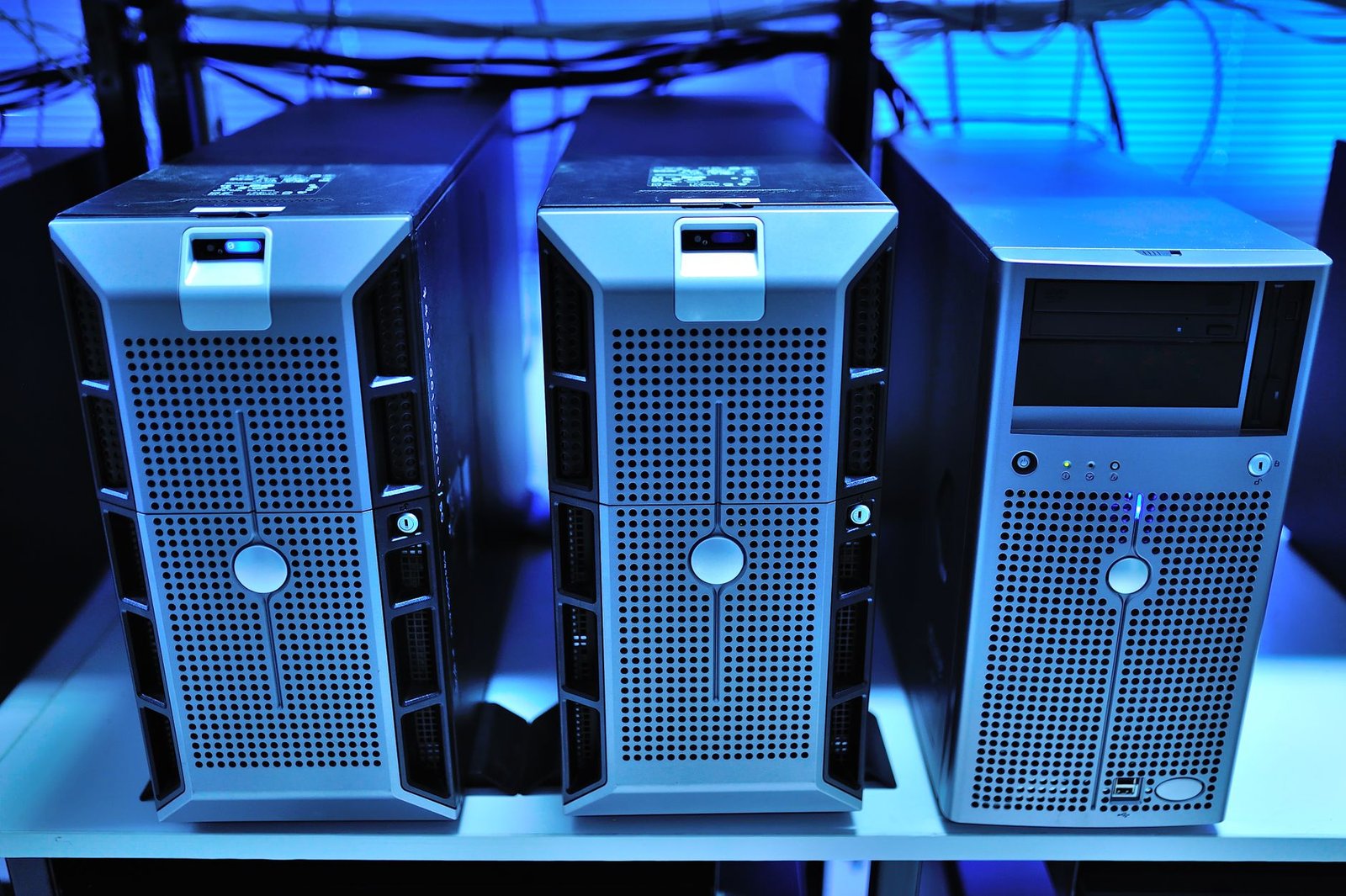
In an era defined by compute nationalism, the ability to control foundational data pipelines, algorithmic architectures, and high-performance semiconductor clusters has transitioned from an enterprise capability to a cornerstone of national security. Abu Dhabi’s Group 42 (G42) operates as the primary instrument through which the United Arab Emirates executes its sovereign compute strategy. Rather than functioning purely as an investment vehicle or private technology enterprise, G42 bridges state-backed capital allocation, geopolitical alignment, and hyperscale infrastructure engineering to address systemic regional computing dependencies.
The Compute Deficit: Regional Scarcity and Algorithmic Hegemony
Historically, the Middle East and North Africa (MENA) region has functioned strictly as an edge-consumer in the global computational supply chain. Hyperscale infrastructure deployments by Western cloud providers traditionally bypassed the region or relegated it to low-latency edge zones optimized for content delivery rather than model training or deep scientific computing. This operational paradigm introduced structural systemic risks:
- Sovereign Data Vulnerability: Critical enterprise, civic, and governmental data flows were routed through external jurisdictions, subjecting national entities to extra-territorial legal and surveillance frameworks.
- Linguistic and Cultural Eradication: Leading foundational Large Language Models (LLMs) trained predominantly on Common Crawl and proprietary Western datasets demonstrated catastrophic tokenization inefficiency and acute hallucinations when processing Arabic script, particularly vernacular dialects.
- Silicon Supply-Chain Chokepoints: As Western export controls tightened around high-bandwidth memory (HBM) modules and advanced compute nodes (such as NVIDIA H100s and B200s), non-aligned or mid-tier sovereign states faced acute structural allocation bottlenecks.
To establish autonomous technological parity, the UAE required a domestic operator capable of orchestrating capital, sovereign energy resources, and international regulatory clearances. G42 was structured specifically to break this dependency framework, functioning as the engineering conduit for Abu Dhabi’s industrial transformation.
The Architectural Blueprint: Condor Galaxy and Linguistic Autonomy
G42’s operational deployment relies on two foundational pillars: distributed high-performance computing clusters and regionally optimized foundational models.
High-Performance Compute Clustering: Condor Galaxy
Recognizing the vulnerabilities of relying solely on GPU supply lines constrained by global allocation queues, G42 executed a joint engineering deployment with Silicon Valley-based Cerebras Systems to architect ‘Condor Galaxy’. Condor Galaxy 1 (CG-1), deployed in Santa Clara, California, and subsequently linked to sister networks in the UAE (CG-2 and CG-3), bypasses conventional GPU cluster inter-connect limits by utilizing Cerebras Wafer-Scale Engine (WSE-2 and WSE-3) systems.
By unifying 4 exaFLOPs of FP16 compute across millions of optimized cores, the Condor Galaxy architecture dramatically reduces the overhead associated with distributed model parallelism. The architectural decision to partner across both wafer-scale hardware and conventional NVIDIA architectures provides G42 with a hedge against monolithic hardware dependency, decoupling its training pipeline from singular hardware vendor bottlenecks.
Linguistic Autonomy: The Jais and Nanda Deployments
In mid-2023, G42 subsidiary Inception, in collaboration with Mohamed bin Zayed University of Artificial Intelligence (MBZUAI) and Cerebras, launched Jais, an open-source, 13-billion parameter bilingual Arabic-English LLM, later scaled to a 30-billion parameter variant. Rather than fine-tuning an existing Meta Llama or Mistral checkpoint, Jais was trained from scratch on a bespoke 395-billion-token dataset containing 116 billion Arabic tokens.
The technical deployment achieved critical efficiency vectors:
- Tokenization Efficiency: Bespoke vocabulary allocation reduced token-to-word ratios for Arabic text from the standard 3.5:1 (typical in Western foundational models) down to 1.4:1, slashing inference latency and compute consumption by more than 50% across Arabic workloads.
- Cultural Semantic Grounding: By curating pre-training datasets internally, G42 mitigated algorithmic bias, aligning the model’s outputs with Gulf legal, social, and governmental operational parameters.
Geopolitical Realignment and Capital Structuring
Operating a sovereign compute powerhouse within the contemporary geopolitical landscape requires aggressive diplomatic and operational precision. G42’s strategic posture underwent a fundamental pivot in late 2023 and early 2024, intentionally severing operational ties and hardware partnerships with Chinese entities—including the divestment of stakes in ByteDance and the phase-out of Huawei telecommunications infrastructure—to fully align with United States export control parameters.
This decisive recalibration paved the way for Microsoft’s landmark $1.5 billion strategic equity investment in G42 in April 2024. The operational dynamics of this transaction are multifaceted:
| Operational Dimension | Pre-2024 Framework | Post-Microsoft Partnership Framework |
|---|---|---|
| Cloud Infrastructure | Fragmented private cloud & hybrid legacy vendors | Migration of all enterprise AI workloads to Microsoft Azure |
| Hardware Access | Subject to Bureau of Industry and Security (BIS) scrutiny | Intergovernmental assurance mechanisms enabling advanced US silicon imports |
| Software Stack | Proprietary open-source derivations | Integration of OpenAI models via Azure, joint development of sovereign enterprise layers |
| Corporate Governance | Closed internal sovereign board | Brad Smith (Microsoft Vice Chair & President) appointed to G42 Board of Directors |
This capital and operational interlock effectively positioned G42 as the primary sovereign broker between Silicon Valley’s frontier AI labs and the global south’s massive capital and energy reserves.
Commercialization Mechanics: The G42 Ecosystem Model
G42 does not operate as a monolithic enterprise; it executes through a federated holding structure where sovereign AI infrastructure serves as the base layer for specialized industry verticals:
- Core42: Delivers sovereign cloud services, digital government infrastructure, and compute capacity orchestration directly to state ministries and multinational enterprises.
- Presight AI: The public-markets big data analytics vehicle, utilizing advanced pattern recognition across smart cities, public finance, and urban infrastructure optimization.
- M42: A global health-tech powerhouse integrating AI diagnostics, multi-omic sequencing, and clinical operations, formed via the integration of Mubadala Health and G42 Healthcare.
- AIQ: A specialized joint venture with Abu Dhabi National Oil Company (ADNOC), deploying predictive maintenance, reservoir modeling, and automated drilling optimizations across energy operations.
- Inception: The frontier research laboratory driving foundation model development, applied AI architectures, and open-source intellectual property.
By vertically deploying AI across capital-intensive national industries (energy, healthcare, defense, civil services), G42 secures captive, high-margin, multi-year contracts that de-risk the massive capital expenditures associated with compute procurement and datacenter construction.
Global Expansion Vectors and Structural Risks
Having stabilized its domestic compute moat, G42 is deploying capital internationally across key growth corridors, specifically Southeast Asia, Sub-Saharan Africa, and Central Asia. In these territories, G42 exports an integrated value proposition: sovereign cloud frameworks combined with local-language LLM infrastructure, directly challenging both unconstrained Western hyperscalers and Chinese Belt-and-Road digital infrastructure deployments.
However, institutional investors and policymakers must monitor distinct structural risks:
- Regulatory and Compliance Exposure: G42 remains reliant on continued regulatory clearance from the US Department of Commerce and the Committee on Foreign Investment in the United States (CFIUS). Any sudden shift in bilateral US-UAE technological trade diplomacy could directly constrain access to next-generation silicon (e.g., NVIDIA Rubin architecture).
- Talent Density vs. Capital Allocation: While G42 possesses virtually unlimited capital through sovereign backing, the concentration of global frontier research talent remains concentrated within the San Francisco-London axis. Sustaining competitive algorithmic development requires continuously attracting and retaining elite AI researchers in Abu Dhabi.
- Inference Economics and Commercial Offtake: The total cost of ownership (TCO) for running massive sovereign clusters must eventually yield self-sustaining commercial returns outside the immediate Abu Dhabi governmental ecosystem. Scaling commercial offtake to private-sector enterprises remains an ongoing milestone.
G42 represents a decisive shift away from passive tech investment toward active sovereign compute stewardship. By intertwining energy reserves, specialized silicon, and intergovernmental diplomacy, Abu Dhabi is not merely participating in the global AI hierarchy; it is constructing an autonomous platform that ensures its long-term relevance across the emerging geopolitical and technological landscape.


Discussion (0)