

The Arid Baseline: Food Security and Import Exposure in the GCC
The Gulf Cooperation Council (GCC) relies on foreign markets for 80% to 90% of its food consumption. This dependence exposes the regional economy to trade-route bottlenecks, export bans, and currency fluctuations. In the United Arab Emirates, where arable land represents less than 1% of the total landmass and groundwater reserves face systemic depletion, conventional agriculture is structurally unviable for sustained volume production. The national economic agenda has consequently repositioned food production from a rural agrarian enterprise to an industrial infrastructure sector under the UAE National Food Security Strategy 2051.
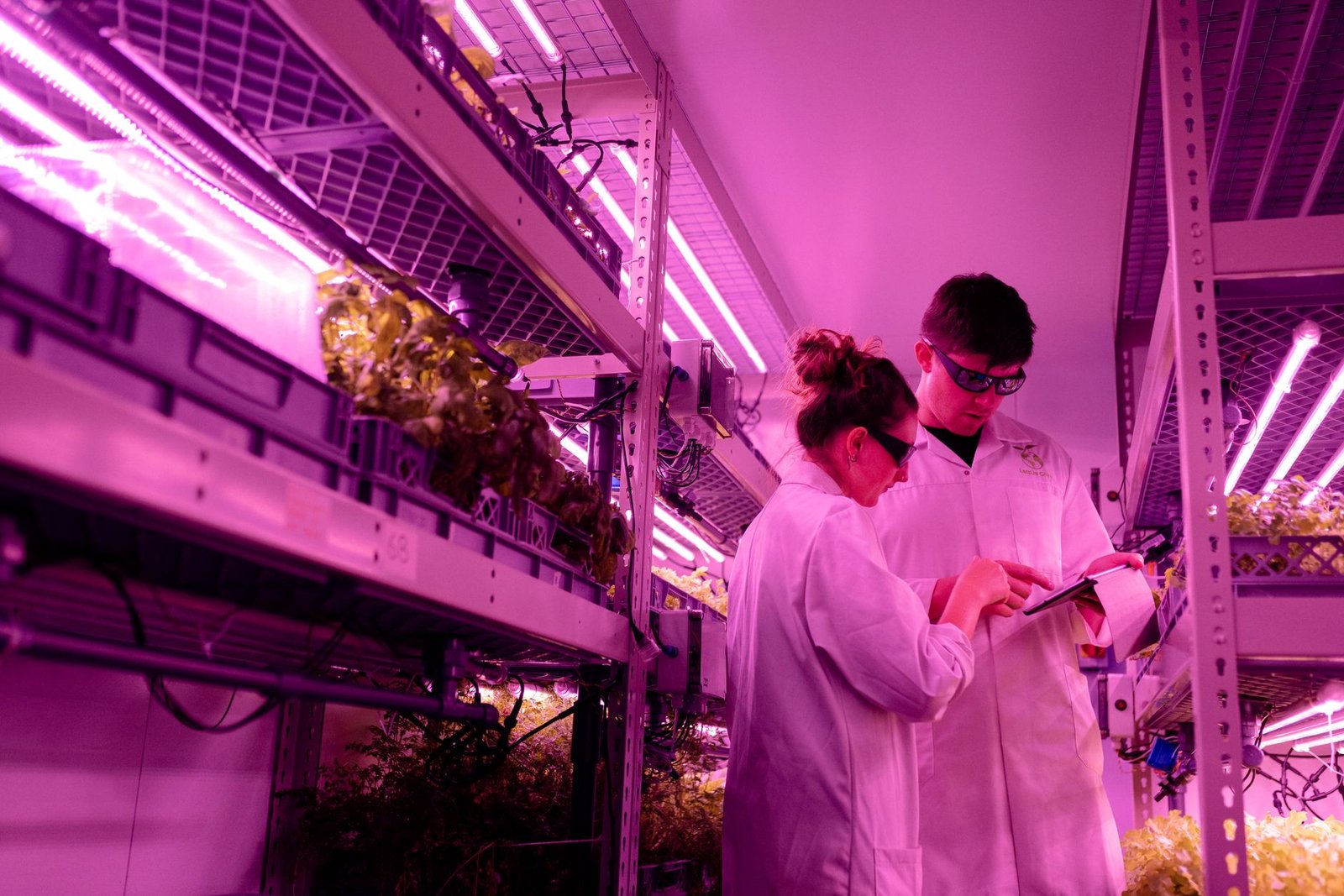
Within this policy environment, the commissioning of Bustanica—the joint venture between Emirates Flight Catering (EKFC) and Boston-based Crop One Holdings—marks a capital allocation transition. The $40 million facility spans 330,000 square feet near Al Maktoum International Airport (DWC) at Dubai World Central. Operating as the world largest vertical farm Dubai has deployed to date, the asset serves as an empirical test case for whether intensive controlled environment agriculture (CEA) can substitute high-risk global supply chains with energy-intensive local manufacturing.
Strategic Blueprint: Asset Architecture and Agronomic Throughput
Bustanica is engineered to deliver a continuous, harvest-ready yield insulated from the ambient desert climate, where summer surface temperatures routinely breach 48°C. By deploying a modular, multi-tier hydroponic racking system across a vertical footprint, the facility achieves a land-use efficiency factor orders of magnitude higher than horizontal open-field farming.
| Operational Metric | Conventional Soil Agriculture | Bustanica CEA Facility |
|---|---|---|
| Facility Footprint | ~1,000,000 sq meters equivalent | 30,650 sq meters (330,000 sq ft) |
| Annual Production Yield | Seasonally variable (1 harvest/yr) | 1,000+ metric tons (continuous) |
| Water Consumption per kg | ~250 – 350 Liters | ~15 – 22.5 Liters (95% reduction) |
| Chemical Pesticide/Herbicide Use | Standard baseline application | Zero (sterile indoor cleanroom) |
| Transit Cycle to Terminal Point | 1,500 – 6,000+ nautical miles | Direct airfield proximity (< 15 km) |
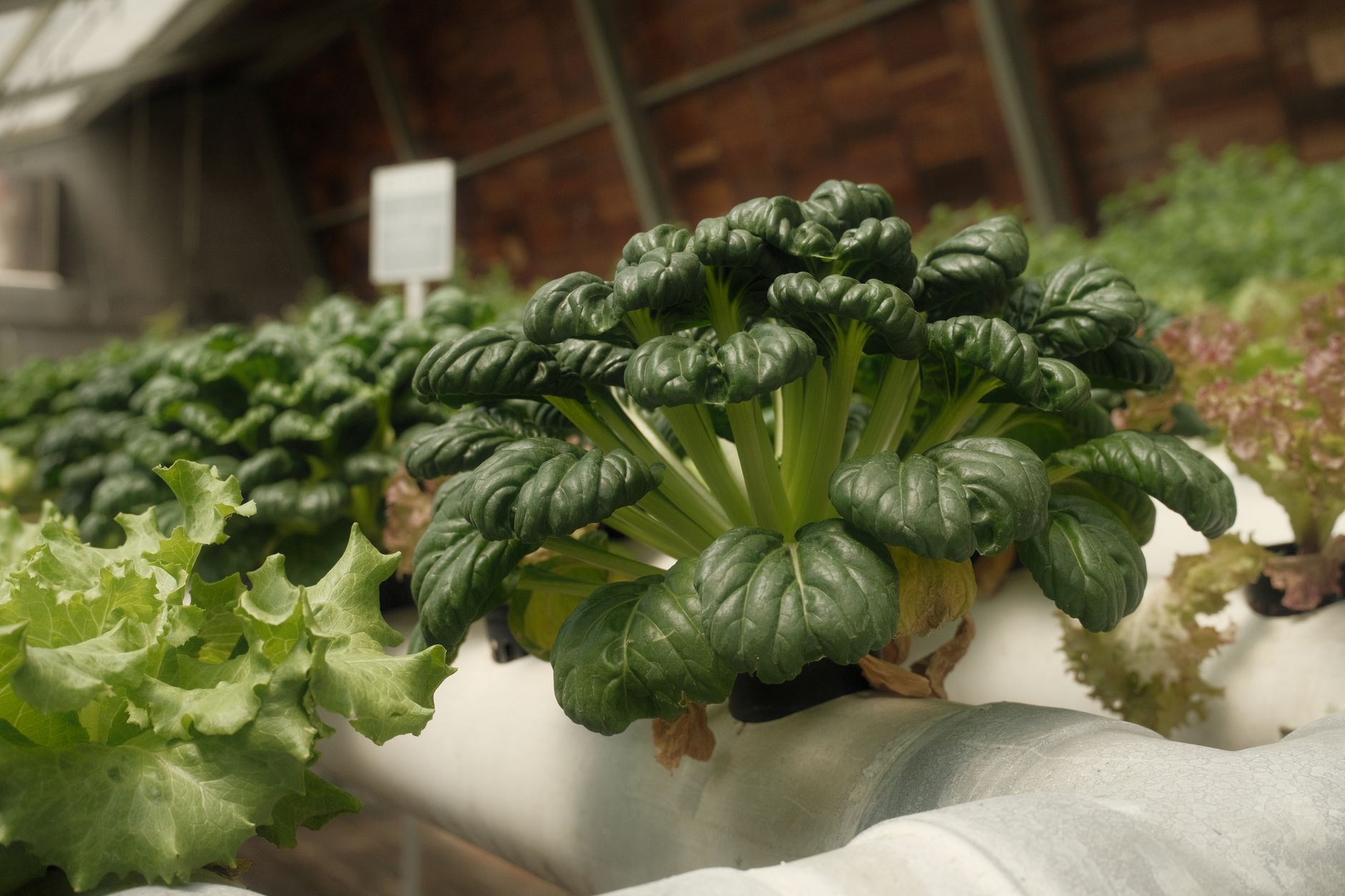
The facility relies on machine-learning-managed climate arrays. Nutrient film technique (NFT) and targeted fertigation deliver an automated balance of macro-nutrients (nitrogen, phosphorus, potassium) and micro-elements directly to plant roots. Agronomists modulate photoperiods, light spectra, and carbon dioxide saturation between 800 and 1,200 ppm to compress harvest cycles of kale, spinach, arugula, and mixed greens to sub-30-day rotations.
Unit Economics and the Thermodynamic Trade-Off
The commercial case for CEA in hyper-arid zones rests on an operational trade-off: trading extreme water conservation against continuous electrical baseload consumption. Bustanica recycles nearly 100% of its moisture output via high-efficiency industrial dehumidification circuits that condense transpiration vapor back into the fertigation loop. This closed-loop configuration saves an estimated 250 million liters of water annually compared to equivalent outdoor production.
However, running hundreds of thousands of specialized LED luminaires alongside multi-megawatt HVAC cooling infrastructure introduces significant operating expenditure (OPEX) exposure:
- Cooling & Thermal Rejection: Mitigating the internal thermal heat load generated by high-density lighting arrays against high external ambient wet-bulb temperatures requires continuous industrial chillers.
- Grid Energy Tariffs: While Dubai’s long-term utility planning integrates low-marginal-cost solar capacity from the Mohammed bin Rashid Al Maktoum Solar Park, baseload operations require unhedged grid stability, exposing the unit cost per kilogram directly to regional commercial energy tariffs.
- CapEx Amortization: At a $40 million initial asset capitalization, plant operators must maintain uninterrupted 100% load capacity to amortize high capital costs against wholesale retail margins.
Supply Chain Integration: Structural Offtake via Aviation
Vertical farms worldwide often struggle with post-commissioning commercial viability due to distributed off-take risk and the price sensitivity of fast-moving consumer goods (FMCG) retail buyers. Bustanica mitigated this risk through structural corporate integration: Emirates Flight Catering serves as both an equity anchor and a guaranteed captive off-taker.
By absorbing a baseline percentage of output directly into catering operations servicing more than 100 passenger airlines operating out of Dubai International Airport (DXB) and DWC, Bustanica neutralizes early-stage volume risk. The remaining balance enters the local retail supply chain under the consumer-facing Bustanica brand across national supermarkets, priced at parity with imported European organic produce.
Macro Policy Implications and Global Exportability
The Bustanica joint venture offers a model for capital-intensive, sovereign-aligned resilience projects across climate-stressed jurisdictions. For institutional allocators and policy strategists across the MENA, Central Asia, and sub-Saharan Africa, the facility provides three core insights:
- Energy Subsidies Must Mirror Water Scarcity: In regions lacking fresh water, desalinated water carries an embedded energy cost. Shifting that energy allocation into closed-loop CEA yields superior calorie and biomass output per megawatt-hour.
- Anchor Offtakers Mitigate Agritech CapEx Risk: Sovereign wealth enterprises, institutional defense units, and state-backed transport fleets must act as contractually bound baseline consumers to secure debt serviceability during initial yield ramps.
- Biosecurity Outweighs Organic Certification: Cleanroom environments eliminate agricultural run-off and pest vectors, enabling produce to be consumed unwashed—a critical operational advantage for the high-throughput aviation and hospitality sectors.
Bustanica confirms that the technological hurdles of hyper-arid food production have largely been solved. The operational mandate now centers strictly on power pricing optimization, operational engineering efficiency, and scaling asset-level financing models to deploy industrial-scale CEA across global arid population corridors.


Discussion (0)