
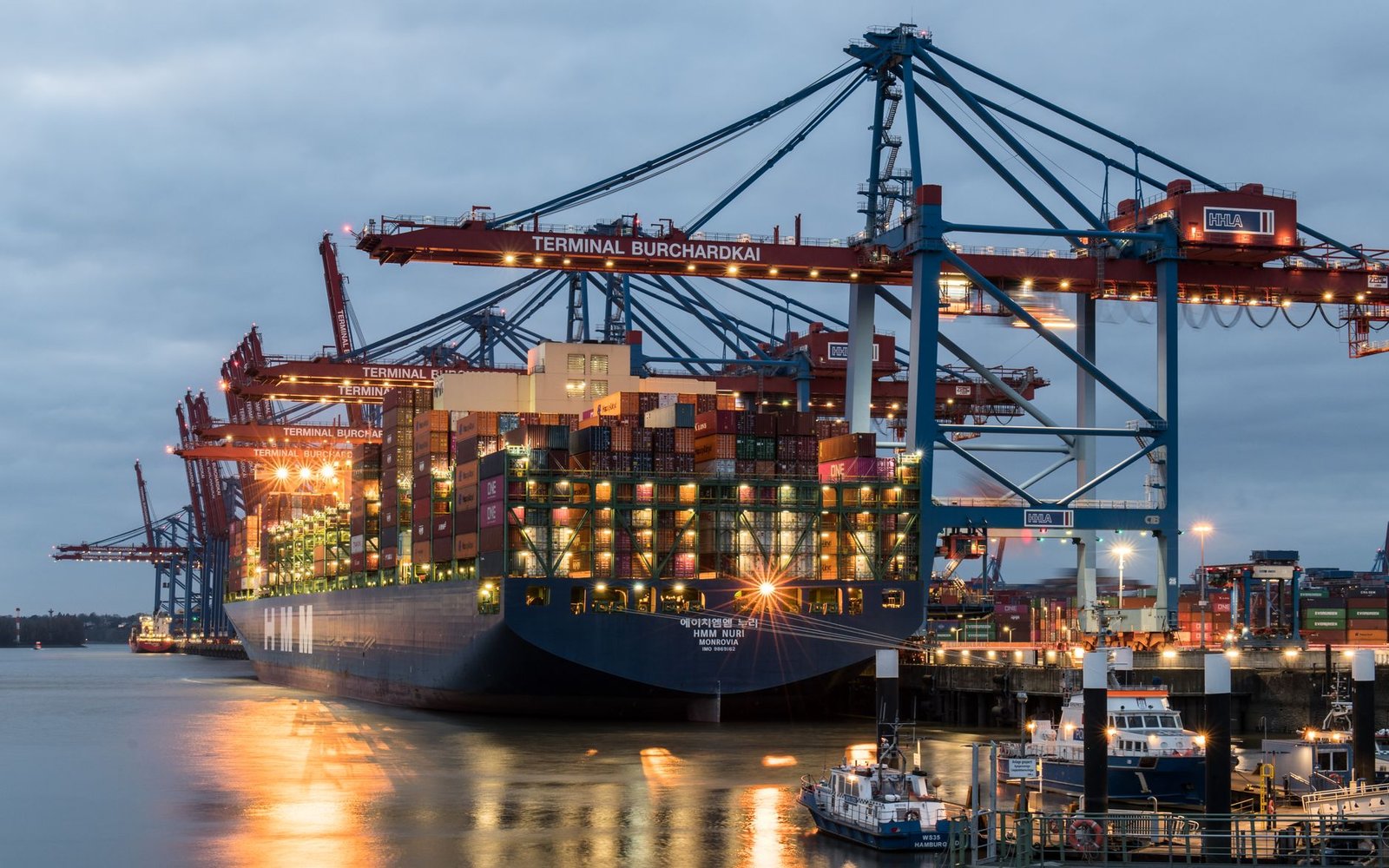
Global maritime trade flows are encountering structural physical ceilings. As ultra-large container vessels (ULCVs) exceeding 24,000 Twenty-Foot Equivalent Units (TEU) dock simultaneously at major maritime hubs, standard yard operations break under land-use constraints, quay-side congestion, and unproductive container reshuffling. At Jebel Ali Port, DP World is decoupling terminal throughput from physical real estate limitations. The logistics major has converted Terminal 4 into a working proving ground for the smart autonomous port terminal Dubai paradigm, integrating High-Bay Storage (HBS) via BoxBay and 5G-directed, remote-automated ship-to-shore (STS) infrastructure.
The Stacking Bottleneck: Density vs. Direct Accessibility
Traditional container terminals operate on an unavoidable operational compromise. To maximize land utilization, terminals stack containers up to six units high using Rubber-Tyred Gantry (RTG) or Rail-Mounted Gantry (RMG) cranes. However, retrieving a box buried beneath five others requires up to five non-productive reshuffle moves. In standard high-density layouts, non-productive handling can account for 30% to 50% of all yard crane cycles, inflating dwell times, consuming excess diesel or electrical energy, and stalling truck turnaround intervals.
For Dubai, whose economic diversification model relies on Jebel Ali handling over 14 million TEU annually across three continents, capacity expansion cannot rely solely on capital-intensive land reclamation. The operational imperative demands vertical density coupled with 100% random access—a capability mechanically impossible within conventional unistack yards.
The Engineering Playbook: BoxBay and 5G Autonomy
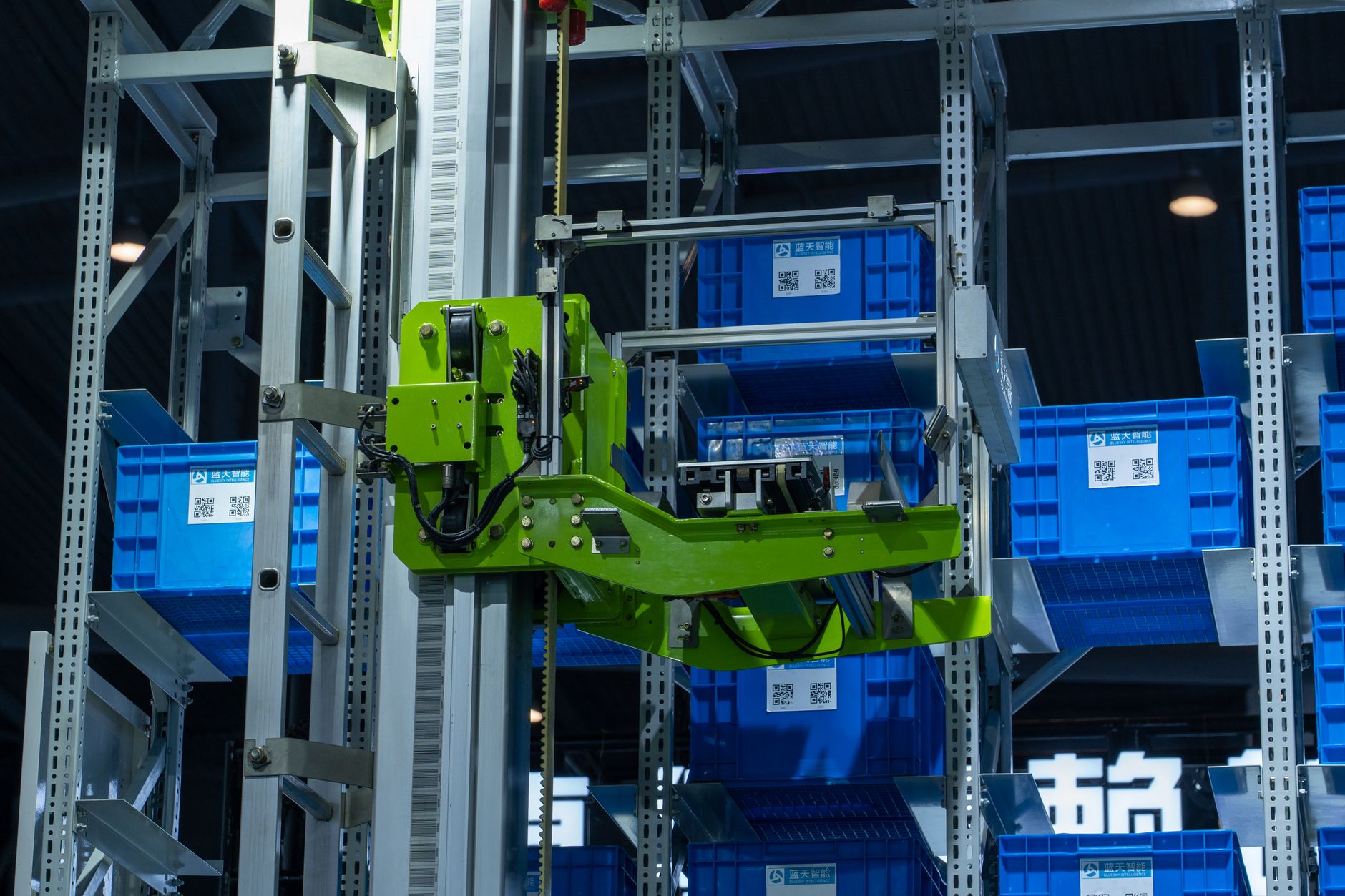
DP World answered this structural challenge through a joint venture with German industrial plant engineering specialist SMS group, developing BoxBay. Instead of resting containers directly upon one another, the BoxBay system utilizes an 11-tier automated high-bay steel racking structure. Each container occupies an individual, structurally isolated cell, served by fully automated, interior-mounted stacker cranes.
Zero-Reshuffle High-Bay Architecture
By encasing containers in a structural grid, BoxBay eliminates reshuffling entirely. Stacker cranes can retrieve any targeted container directly without displacing adjacent units. At Jebel Ali’s Terminal 4 trial installation, this design achieved:
- Footprint Compression: Triple the storage capacity per hectare compared to conventional RTG yards.
- Handling Velocity: More than 19 moves per hour per crane corridor, delivering up to a 77% reduction in road truck turnaround times.
- Decarbonization: Complete electrification powered entirely by yard-level solar arrays mounted across the rack’s roof structure, cutting direct terminal carbon emissions by roughly 20%.
5G Ultra-Reliable Low-Latency Communication (URLLC)
Physical racking solves yard density, but quay-to-yard integration requires low-latency communications. In partnership with local telecommunications infrastructure and industrial automation providers, DP World converted Jebel Ali’s STS gantry cranes and Automated Guided Vehicles (AGVs) from legacy Wi-Fi and fiber reels to private 5G Standalone (SA) network slicing.
Standard Wi-Fi configurations in container yards suffer from signal degradation caused by shifting steel corridors as container stacks move. Private 5G networks deliver deterministic sub-10-millisecond latency and 99.999% reliability. This enables optical camera arrays, PLC telemetry, and LiDAR feeds to stream continuously from STS cranes to remote operations centers situated kilometers away, allowing single operators to oversee multiple concurrent loading sequences in complete safety.
| Operational Metric | Conventional RTG Terminal | Standard Automated ASC Terminal | BoxBay + 5G Terminal (Jebel Ali) |
|---|---|---|---|
| Stack Height (Max Units) | 4 to 6 | 5 to 6 | 11 |
| Reshuffle Rate (% of Moves) | 25% – 45% | 15% – 30% | 0% (Direct Access) |
| Land Utilization (TEU/Hectare) | 700 – 1,000 | 1,000 – 1,300 | Up to 3,000 |
| Network Latency Threshold | 50ms – 120ms (Wi-Fi) | 20ms – 50ms (Hybrid Fiber) | <10ms (Private 5G SA) |
| Equipment Energy Source | Diesel / Grid Hybrid | Grid Electric | Solar-Integrated Direct Electric |
Unit Economics and Capital Expenditure Realities
Transitioning to an autonomous vertical framework shifts a terminal operator’s balance sheet from variable operational expenditures (OPEX) to concentrated upfront capital investment (CAPEX). Conventional terminals feature low entry barriers: paved tarmac, civil works, and leased mobile equipment. Conversely, a facility like BoxBay demands extensive civil foundations capable of handling massive point loads, steel superstructure fabrication, and specialized automation control software.
However, the long-term unit economics strongly favor automation in prime transshipment corridors:
- Labor Optimization: Shifting crane operators to climate-controlled remote pulpits reduces direct yard labor allocations by up to 70%, concurrently eliminating occupational hazards within the berth buffer zone.
- Asset Depreciation and Throughput: Berth productivity directly dictates shipping line vessel deployment. By cutting vessel turnaround windows by 20% to 30%, port operators can monetize existing quay wall assets at higher throughput multiples without dredging new berths.
- Energy Arbitrage: The integration of regenerative braking in the racking stackers, combined with roof-mounted PV arrays, hedges the terminal against regional power grid volatility and volatile diesel costs.
Exporting the Jebel Ali Blueprint to Global Gateways
Jebel Ali functions as a testbed and global reference site. DP World operates more than 80 maritime and inland terminals across six continents. The technological innovations validated under the smart autonomous port terminal Dubai initiative are slated for systemic deployment across dense, space-constrained gateways globally.
In mature ports across Europe (such as London Gateway and Antwerp-Bruges) and developing Asian gateways (such as Nhava Sheva and Pusan), land reclamation is either legally restricted by environmental mandates or financially unfeasible. BoxBay’s vertical footprint offers these constrained terminals a pathway to expand annual container capacity within their current borders. By proving the mechanical and network resilience of unmanned vertical storage in Dubai’s harsh maritime climate—characterized by temperatures exceeding 45°C, high humidity, and fine airborne dust—DP World is validating a modular automation system ready for deployment across global supply chain choke points.


Discussion (0)