

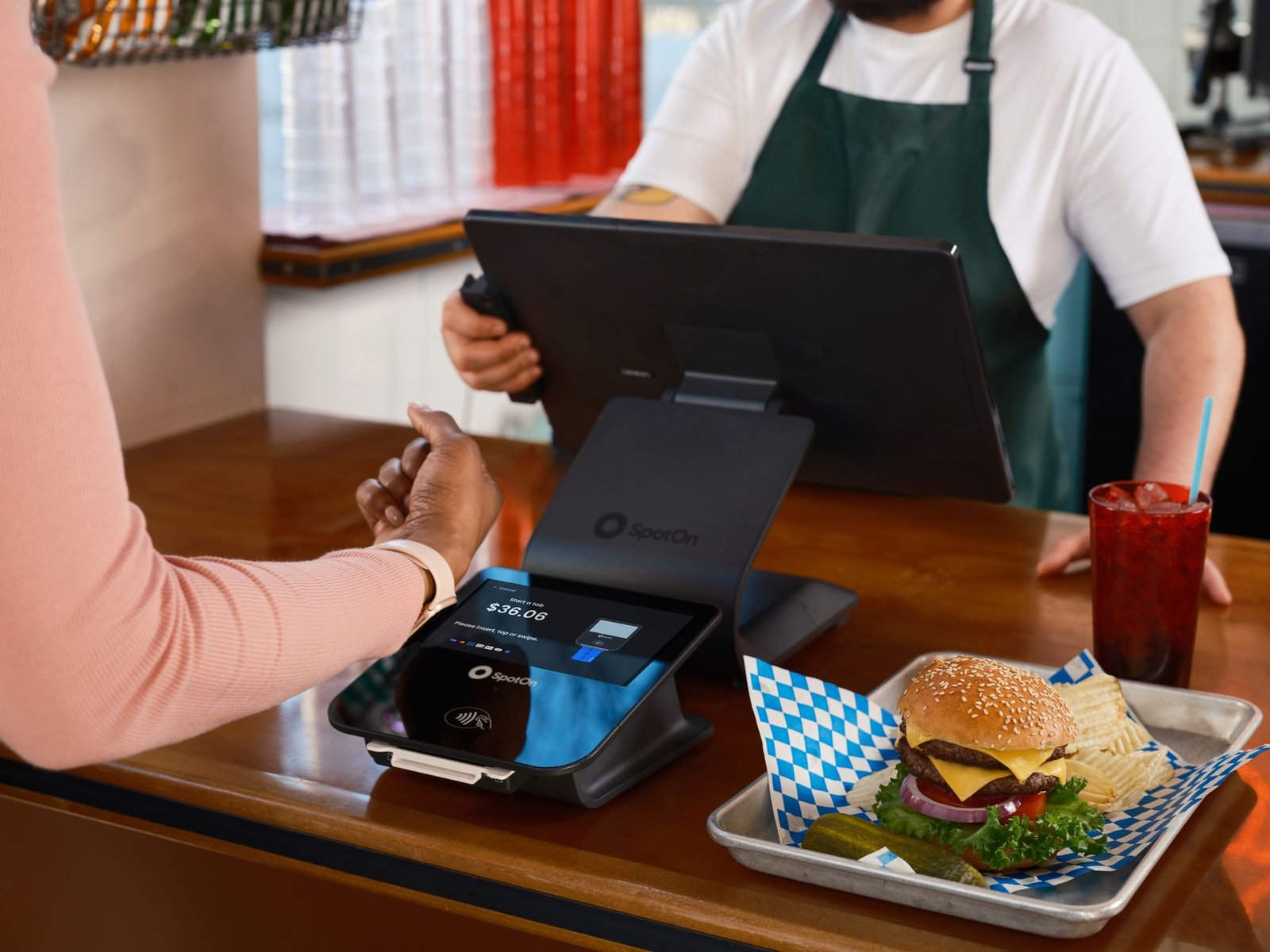
Enterprise software emerging from the Gulf Cooperation Council (GCC) has historically faced systemic skepticism regarding international portability. Dominated by localized consumer-facing marketplaces and logistics aggregators, the regional ecosystem rarely produced enterprise-grade, multi-tenant software-as-a-service (SaaS) platforms capable of scaling beyond domestic borders. Foodics has disrupted this structural pattern. Founded in Khobar in 2014 by Ahmad Al-Zaini and Mosab Al-Othmani, the company transitioned from an iPad-based point-of-sale (POS) utility to an integrated restaurant operating system that unifies payments, back-of-house inventory, and capital allocation.
The Regional Operating Bottleneck: Legacy Fragmented Retail
Prior to Foodics’ market entry, the Middle East and North Africa (MENA) food and beverage (F&B) sector operated on disparate, on-premise infrastructure. Legacy vendors sold monolithic server-client setups characterized by high upfront licensing fees, prohibitive maintenance contracts, and complete absence of real-time multi-branch orchestration. Operators across casual dining, quick-service restaurants (QSR), and cloud kitchens managed procurement, floor operations, and accounting in discrete, disconnected operational silos.
This operational friction intensified with macroeconomic regulatory shifts. The Kingdom of Saudi Arabia’s implementation of Zakat, Tax and Customs Authority (ZATCA) electronic invoicing mandates (Phase 1 and Phase 2) rendered legacy cash registers obsolete. Operators faced statutory compliance deadlines requiring cryptographic stamping, real-time API integrations, and tamper-proof audit trails. The scarcity was not merely digital software; it was localized, enterprise-grade infrastructure built to reconcile strict fiscal requirements with high-volume merchant transactional velocity.
The ZATCA Catalyst and Vertical Moats
Foodics leveraged these regulatory tailwinds to convert compliance friction into a distribution moat. While international competitors like Toast and Square prioritized domestic Western markets, Foodics engineered its architecture around local fiscal topologies, Arabic-first interface semantics, and domestic payment rails such as Saudi Payments (Mada). The resulting platform compressed merchant onboarding timelines from weeks to hours, establishing an initial installed base that scaled alongside Saudi Arabia’s retail and hospitality expansion under Vision 2030.
The Strategic Playbook: Vertical SaaS Meets Embedded Finance
The core strategic thesis underlying the Foodics platform is the transformation of software from a workflow expense into an operating system tied directly to Gross Merchandise Value (GMV). By bundling cloud architecture with proprietary payment facilitation and inventory intelligence, the company decoupled its growth from pure subscription software seat-pricing.
1. Payments Monetization (Foodics Pay)
Pure-play SaaS models in emerging markets face constrained Average Revenue Per User (ARPU) ceilings when relying strictly on subscription billing. Foodics bypassed this threshold by launching Foodics Pay, embedding payments processing directly into the POS terminal. By serving as a payment facilitator (PayFac) integrated with the Saudi Mada scheme and international card networks, Foodics captures transactional take rates on every merchant transaction. This mechanism aligns platform revenue directly with client revenue expansion, neutralizing churn through programmatic transactional integration.
2. Programmatic Capital Allocation (Foodics Capital)
Access to working capital remains a chronic growth constraint for independent restaurant operators across MENA. Traditional commercial banks rely on real estate collateral and manual underwriting cycles that exclude small-to-medium enterprises (SMEs). Foodics monetized its continuous telemetry data—daily transaction volume, table turns, inventory cycles, and supplier payables—to engineer Foodics Capital. By deploying an algorithmic lending engine with institutional partners, the company underwrites pre-approved micro-loans deducted directly from future daily card receivables, securing high recovery rates while creating a compounding retention loop.
3. Inorganic Expansion: The POSRocket Acquisition
Rather than relying solely on organic Greenfield sales cycles across adjacent markets, Foodics executed an inorganic expansion playbook. In 2022, the company acquired POSRocket, the second-largest restaurant cloud POS provider in the MENA region. This strategic acquisition instantly unlocked significant market share in Jordan, Egypt, and the Levant, eliminating years of customer acquisition friction and immediately migrating regional merchant GMV onto Foodics’ centralized financial architecture.
Comparative Architecture: Legacy POS vs. Foodics End-to-End Cloud Platform
| Operational Dimension | Legacy On-Premise POS | Foodics Integrated Restaurant OS |
|---|---|---|
| Deployment & Upgrades | Local server hardware; manual on-site engineer deployments. | Multi-tenant Cloud native (AWS); continuous CI/CD automated deployment. |
| Revenue Mechanism | One-time software license + hardware markups + maintenance fees. | Dual engine: Predictable SaaS subscriptions + embedded fintech take rates. |
| Fiscal Compliance | Static fiscal printers; complex retrofitted API patches. | Automated cloud-level compliance with regional mandates (e.g., ZATCA Phase 2). |
| Fintech Integration | Decoupled third-party external card reader terminals. | Unified POS and terminal (Foodics Pay); integrated micro-lending (Foodics Capital). |
| Data Telemetry | Isolated local databases; batch reconciliation. | Real-time streaming analytics across single or multi-brand franchises. |
Capital Structure and Financial Resilience
Foodics’ institutional maturity accelerated dramatically with its $170 million Series C funding round in 2022, led by Prosus and Sanabil Investments (a wholly-owned subsidiary of the Public Investment Fund). The presence of global technology investors validated the company’s operating metrics, which demonstrated enterprise SaaS retention fundamentals:
- Net Revenue Retention (NRR): Sustained above 115% through payment monetization and terminal expansion within established accounts.
- Gross Margin Diversification: A rebalanced revenue composition shifting from hardware sales to recurring subscription and payments revenue, generating software margins upwards of 70% on core product tiers.
- Merchant Scale: Deployment across tens of thousands of active merchant locations throughout Saudi Arabia, the UAE, Egypt, and neighboring markets, handling billions of dollars in annualized GMV.
The Global Expansion Vector: Exporting the GCC Playbook
The dominant analytical question facing sovereign wealth allocations and global venture capital is whether a Middle Eastern enterprise platform can scale horizontally into mature or diverse emerging markets. Foodics’ structural advantages offer a distinct thesis for international expansion.
Developing World Leapfrogging
Much like emerging markets bypassed desktop infrastructure directly to mobile, emerging market retail environments are bypassing legacy on-premise infrastructure directly to cloud-fintech convergence. Markets across Southeast Asia, Eastern Europe, and Sub-Saharan Africa share structural similarities with Foodics’ home base: fragmented supplier landscapes, an informal retail long-tail, aggressive central-bank digitizations of cash, and under-banked SMEs.
Foodics operates as an operational layer engineered specifically for semi-volatile macroeconomic environments. Unlike Western platforms optimized for frictionless card-only economies with high baseline labor costs, Foodics was built to solve inventory shrinkage, supply chain disconnects, multi-currency accounting, and rapid changes to statutory tax frameworks. This makes its technology highly competitive across emerging economies over legacy platforms built for non-complex fiscal regimes.
Enterprise Franchise Portability
Global multi-unit restaurant brands operating under master franchise agreements throughout the Middle East frequently mandate enterprise-level centralized reporting across diverse jurisdictions. As Foodics integrates deeper into global enterprise brands operating regional nodes, the platform establishes reference architecture that can be ported to the brand’s master holdings across secondary and tertiary global markets.
The Venture Infrastructure Template
Foodics demonstrates a repeatable blueprint for non-Western enterprise technology creation. The strategic sequence—monopolizing local regulatory compliance, scaling an initial workflow utility, capturing transaction volume via embedded financial services, acquiring regional competitors, and expanding across global frontiers—serves as an operational model for founders and investors targeting B2B market leadership. The company demonstrates that enterprise software dominance is not determined by geographical origin, but by the structural alignment of workflow software with the fundamental cash and operational flows of merchant businesses.



Discussion (0)